UNESCO Global Geopark Algarvensis
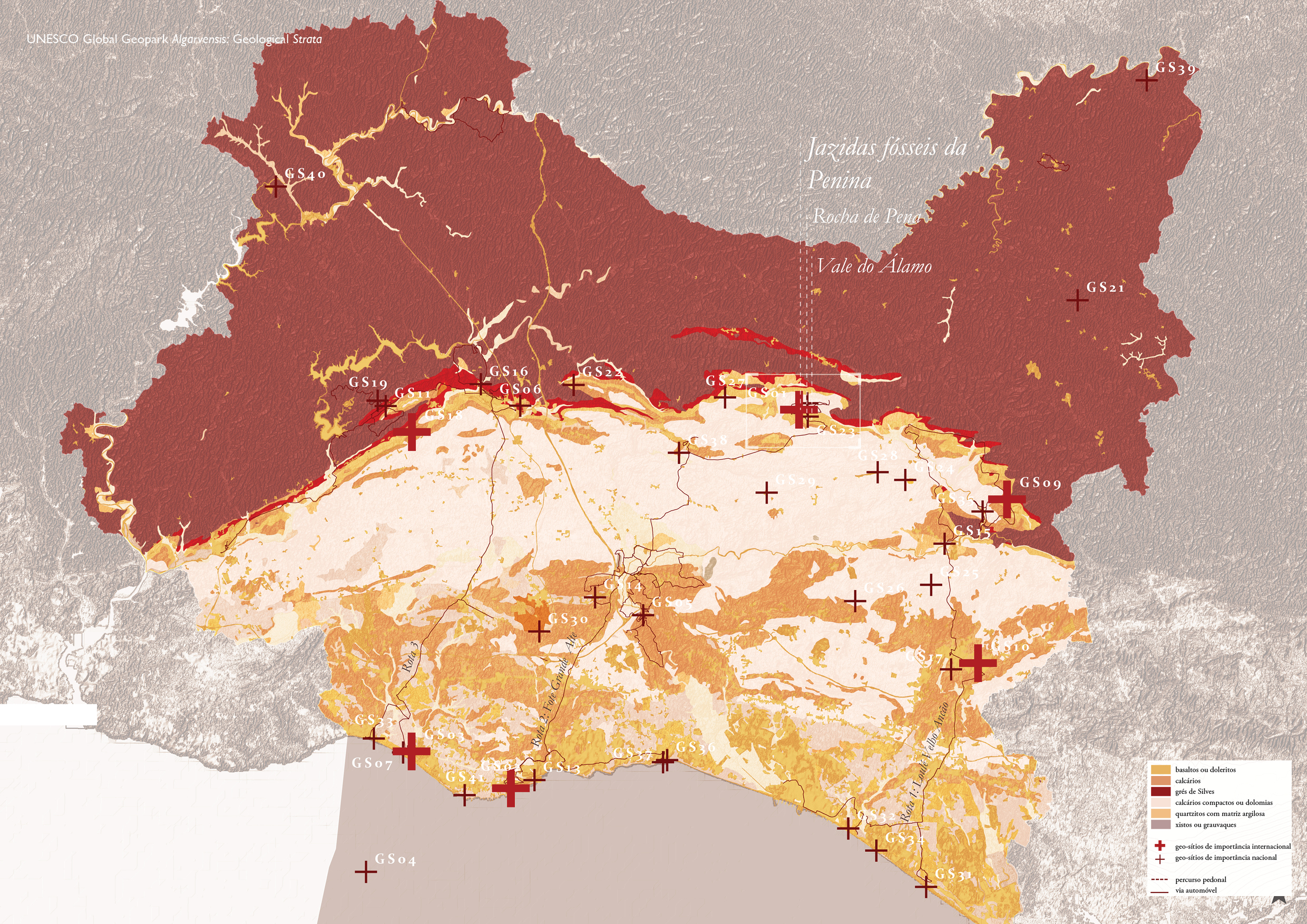
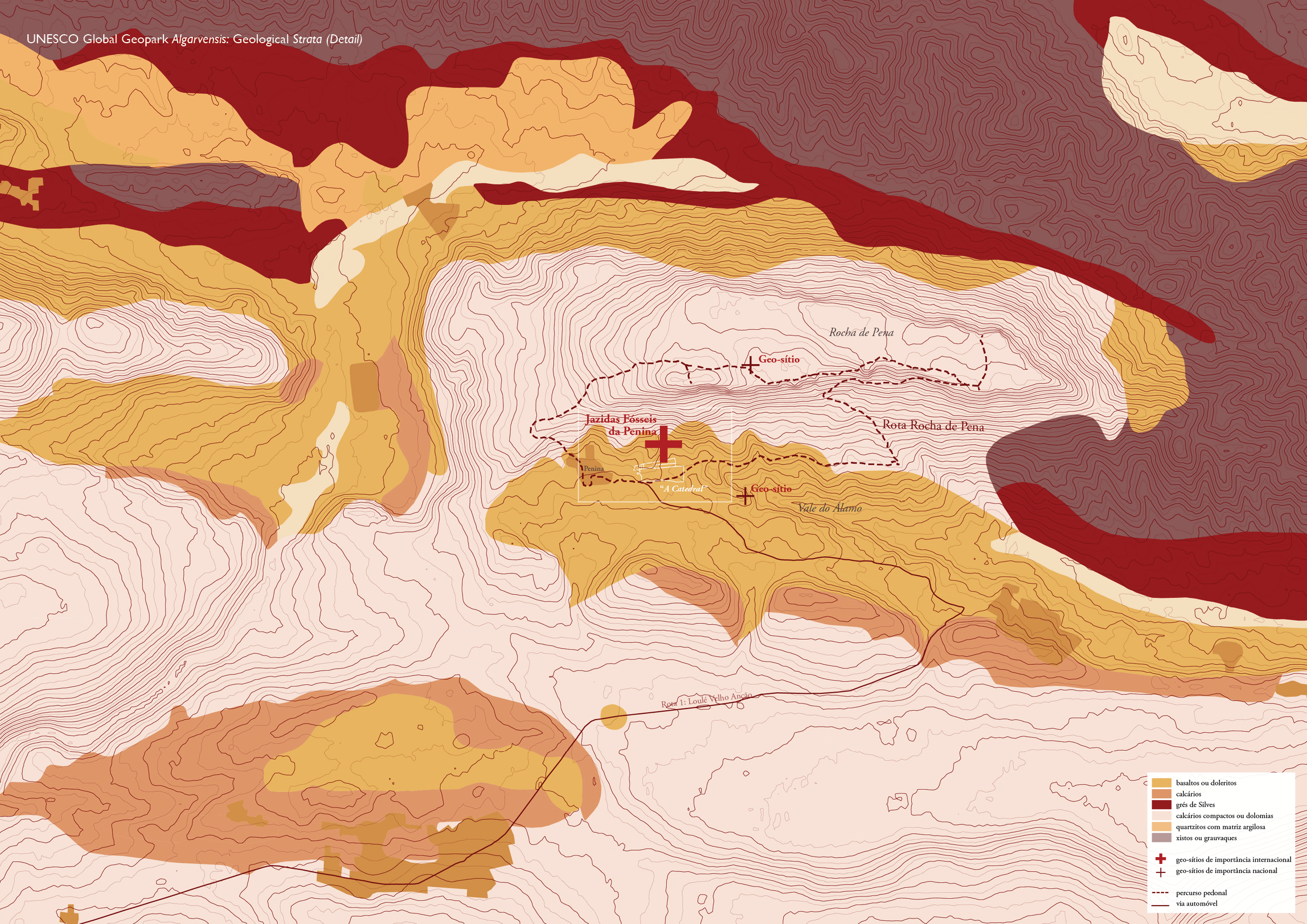
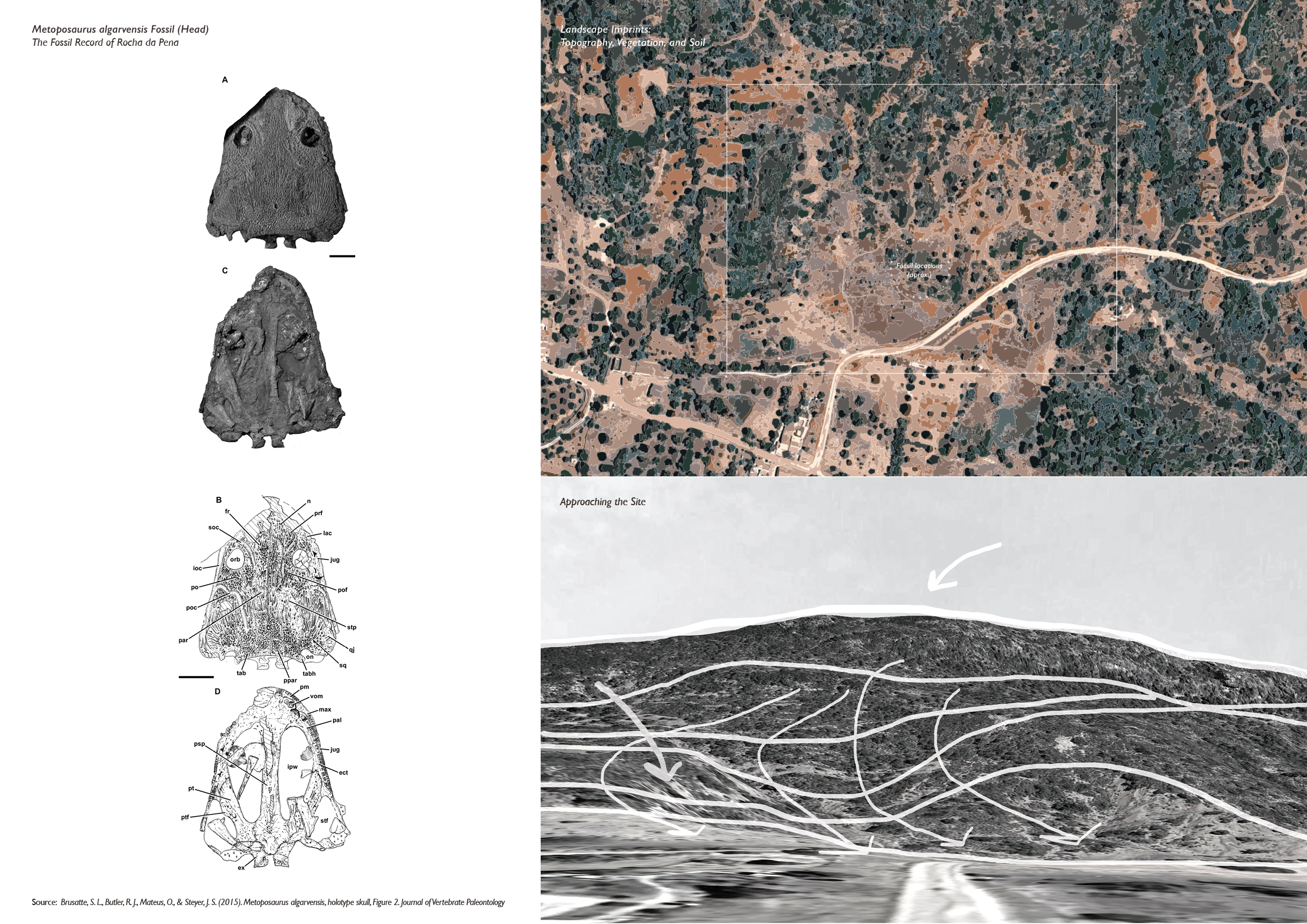
The Landscape Masterplan and Interpretation Center, the “Cathedral,” for the UNESCO Global Geopark Algarvensis covers 150 hectares at the internationally significant Penina geosite, in the municipality of Loulé, Portugal. The site contains fossil deposits (jazidas) of Metoposaurus algarvensis, a large prehistoric amphibian whose distinctive anatomical features make these discoveries particularly significant to the geological and paleontological history of the region.
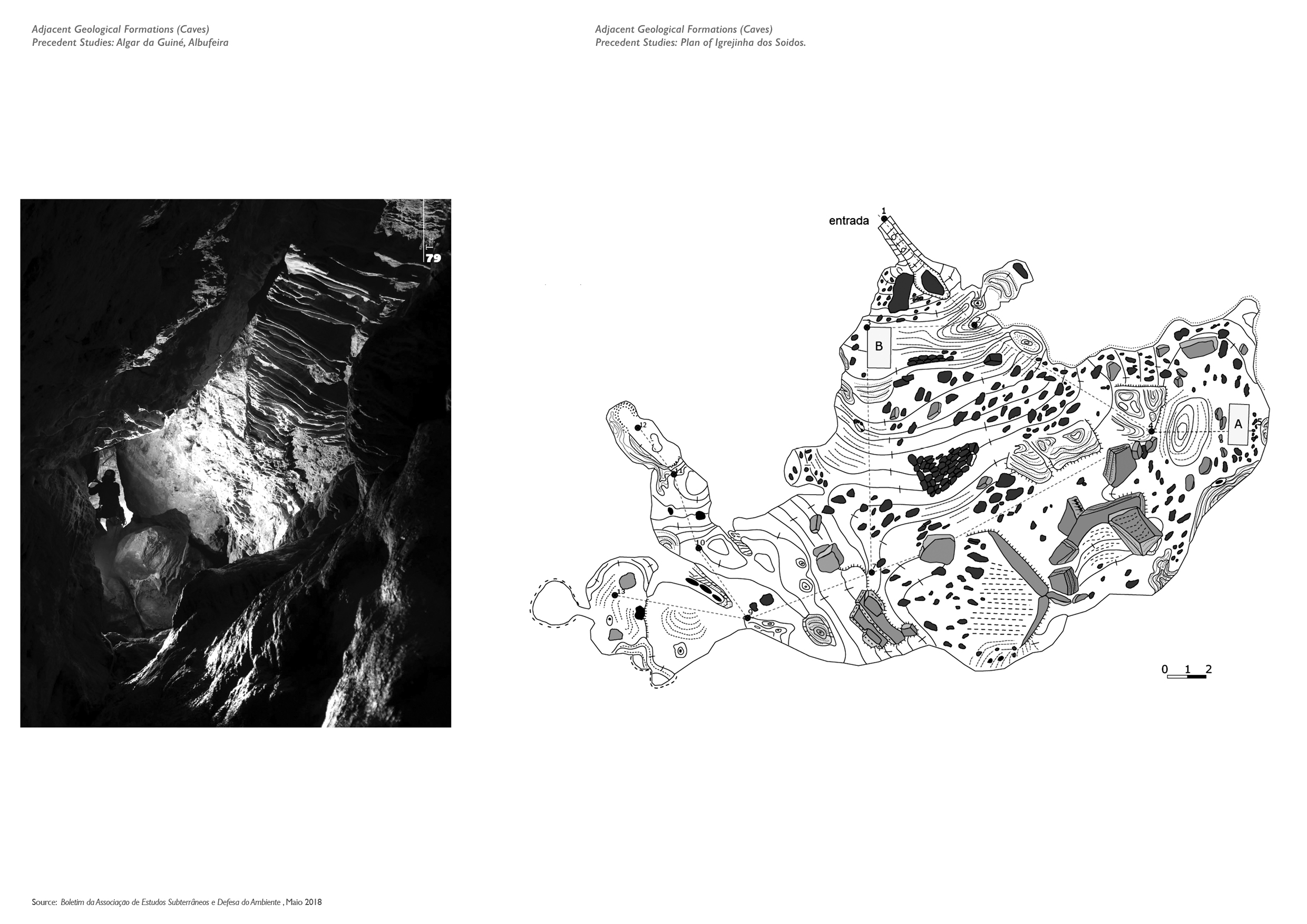
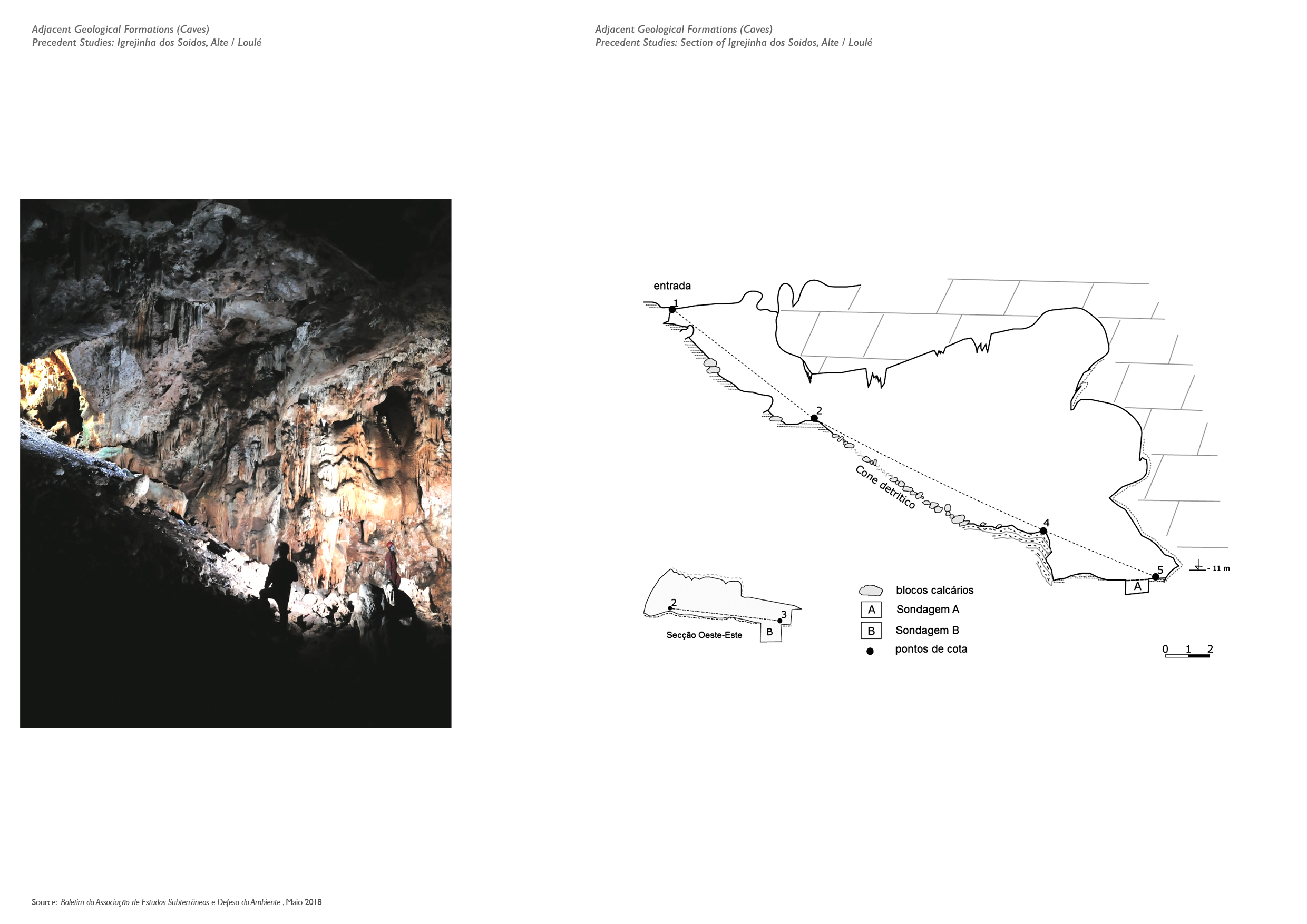
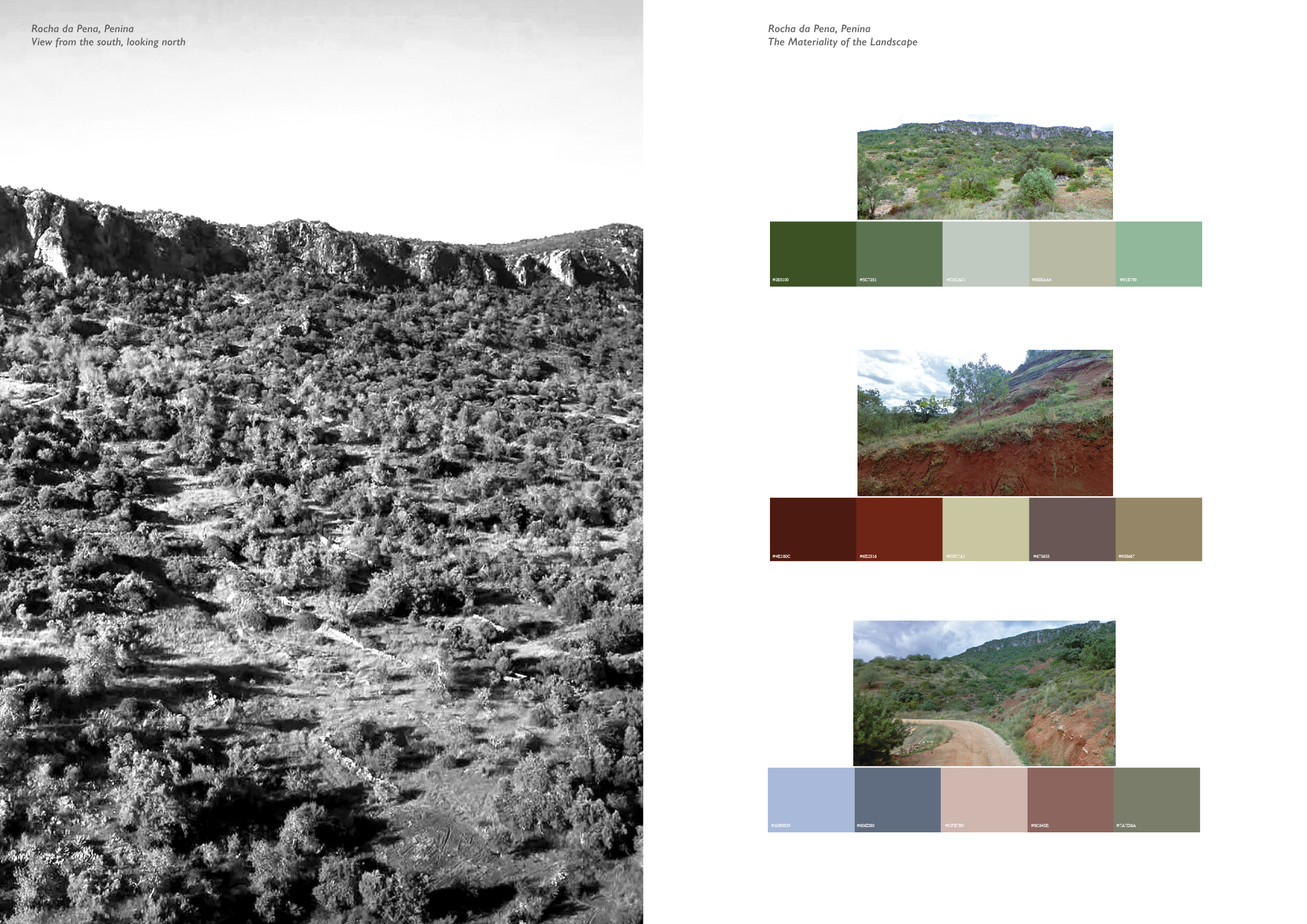
The project considers geological heritage as part of a living landscape in which geology, water, soil, climate, vegetation, wildlife, and human activities are closely connected. Located at the foothills of Rocha da Pena, an imposing limestone formation and protected natural monument, the project brings together the site's ancient geological history, karst formations, water infrastructure, native vegetation, and fossil records to establish a long-term strategy for the regeneration and stewardship of this remarkable landscape.
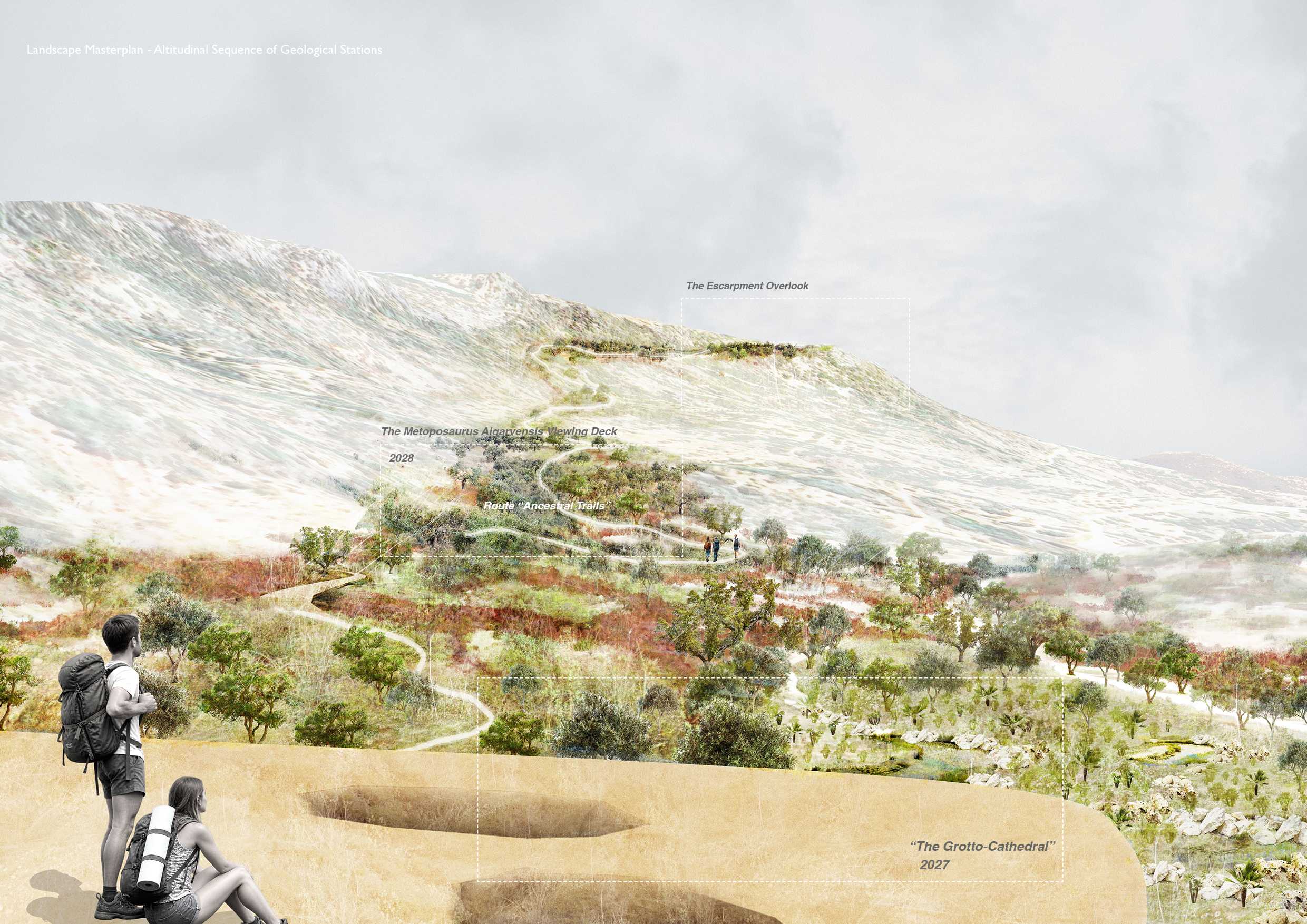
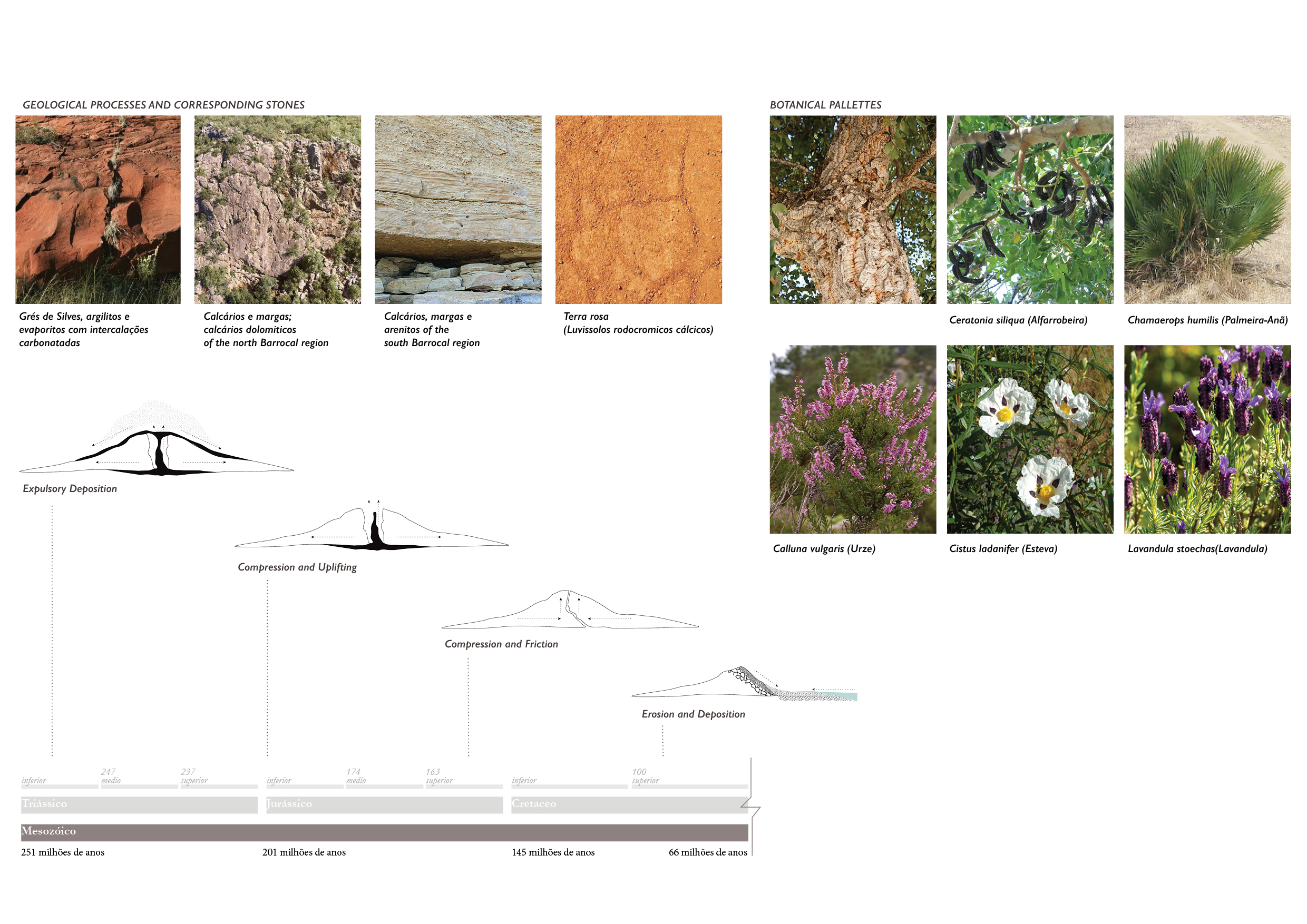
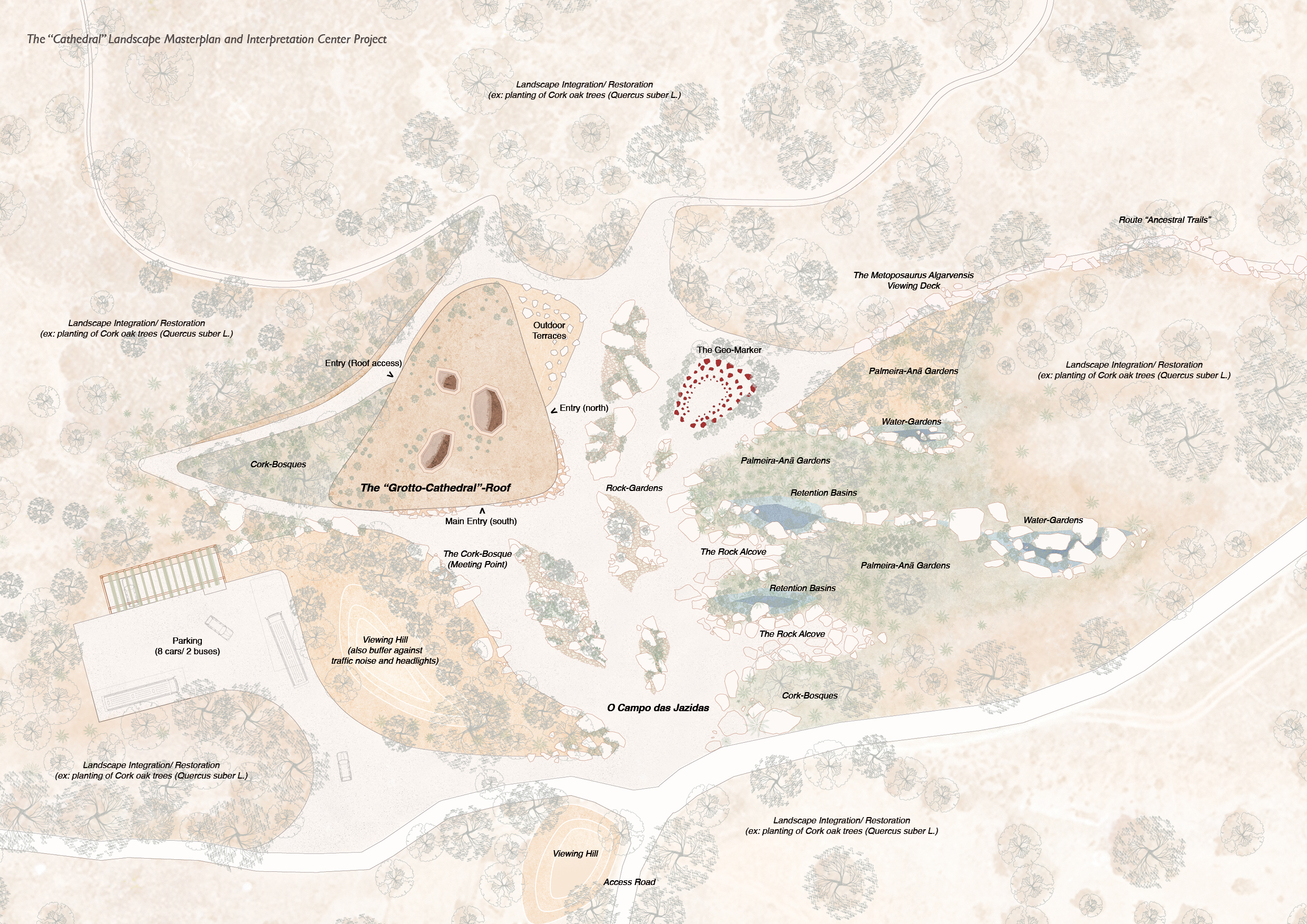
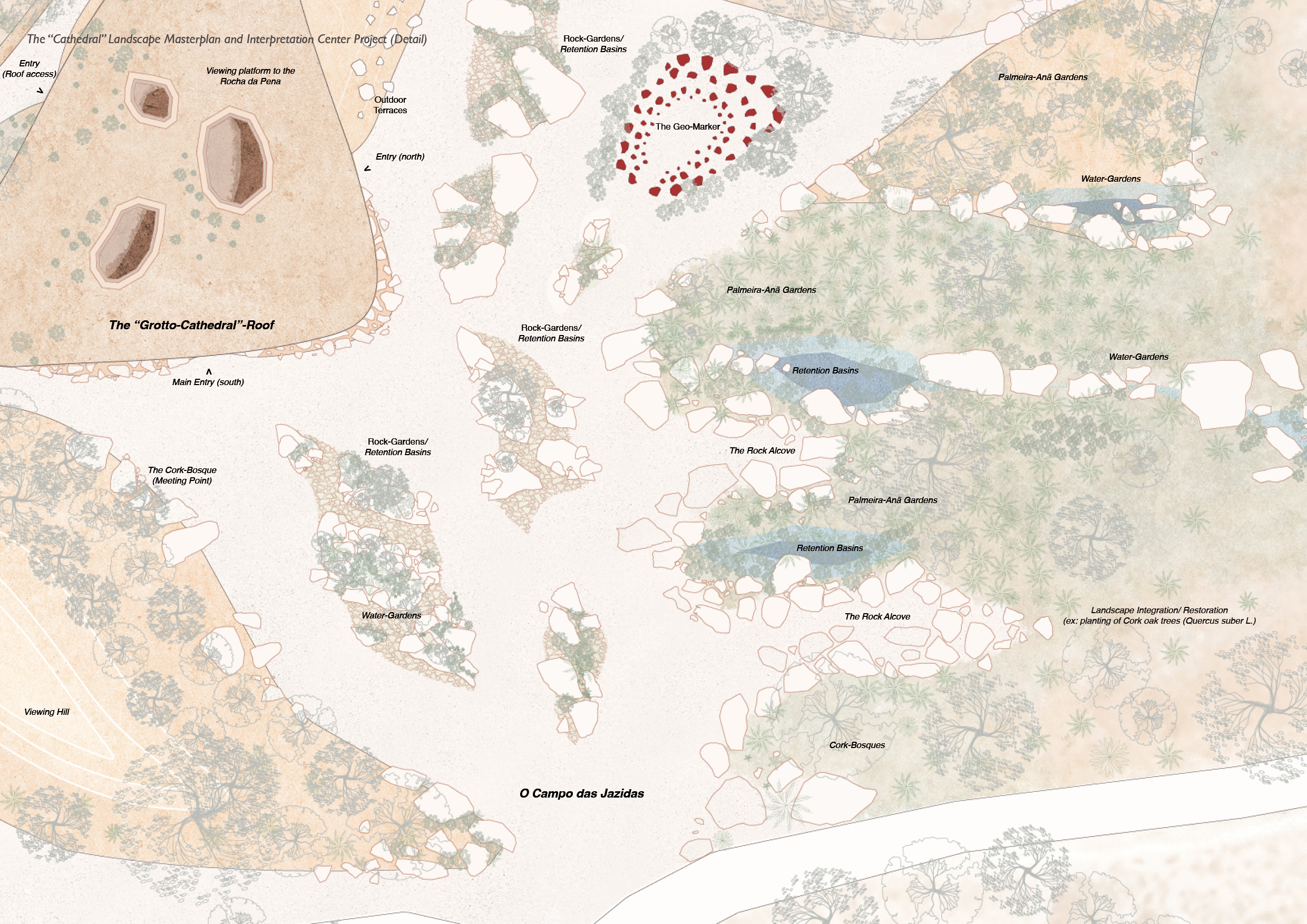
The Masterplan combines ecological regeneration, geological interpretation, and public use across the 150-hectare site in a series of building phases. The careful grading of the terrain directs rainwater into a network of retention and infiltration basins and rain gardens, allowing water to be collected, naturally filtered, and absorbed into the soil. These interventions reduce erosion, improve soil conditions, and support the regeneration of native vegetation, including dwarf palms (Chamaerops humilis), cork oaks (Quercus suber), and shrubs such as rockroses, heathers, and rosemary. Historic and new trails guide visitors across different elevations, connecting former sea levels, geological formations, fossil deposits, and traces of ancient life. Changes in elevation help visitors understand the site's geological history, while gardens, gathering spaces, and geological markers make this history visible and accessible.
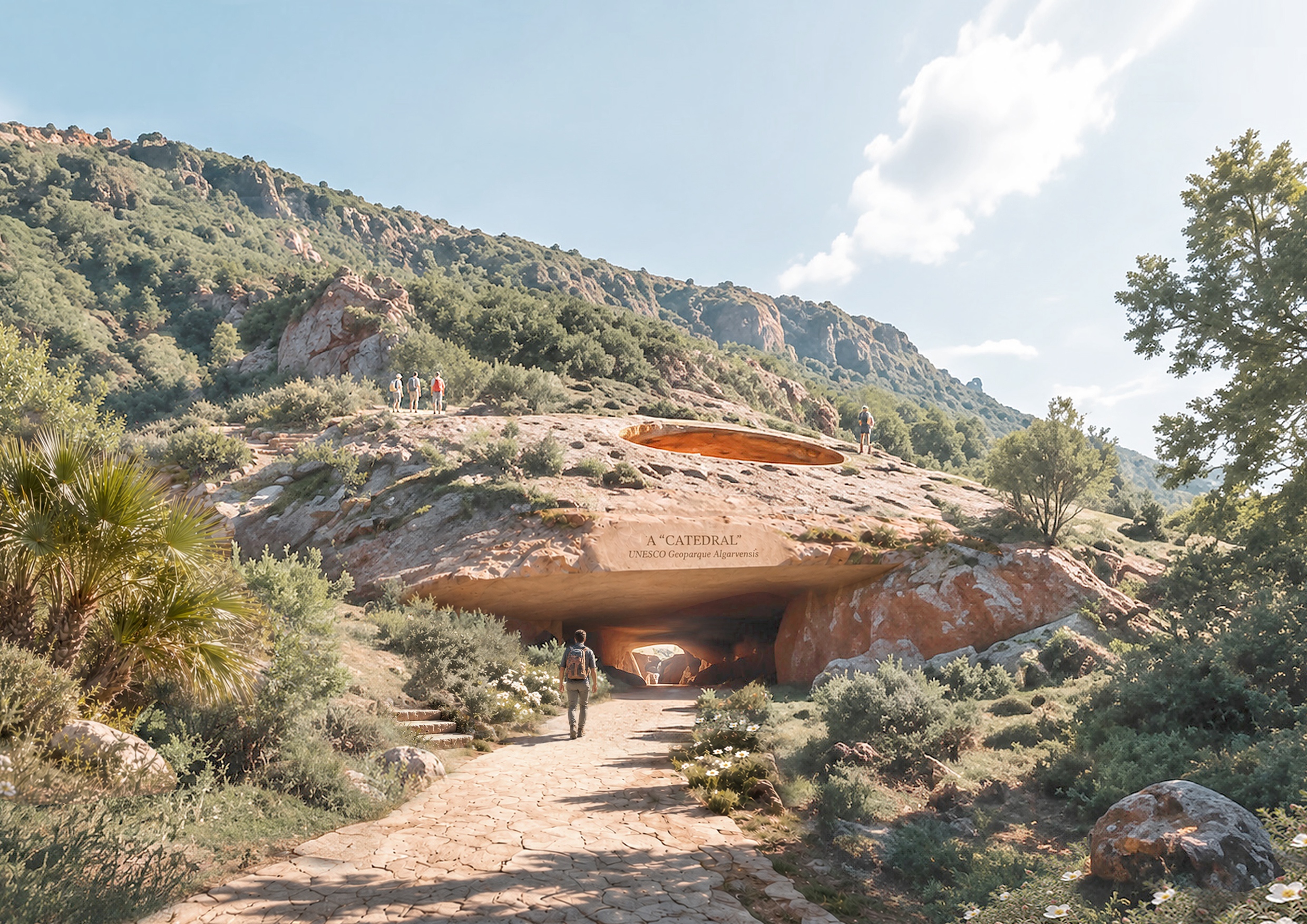
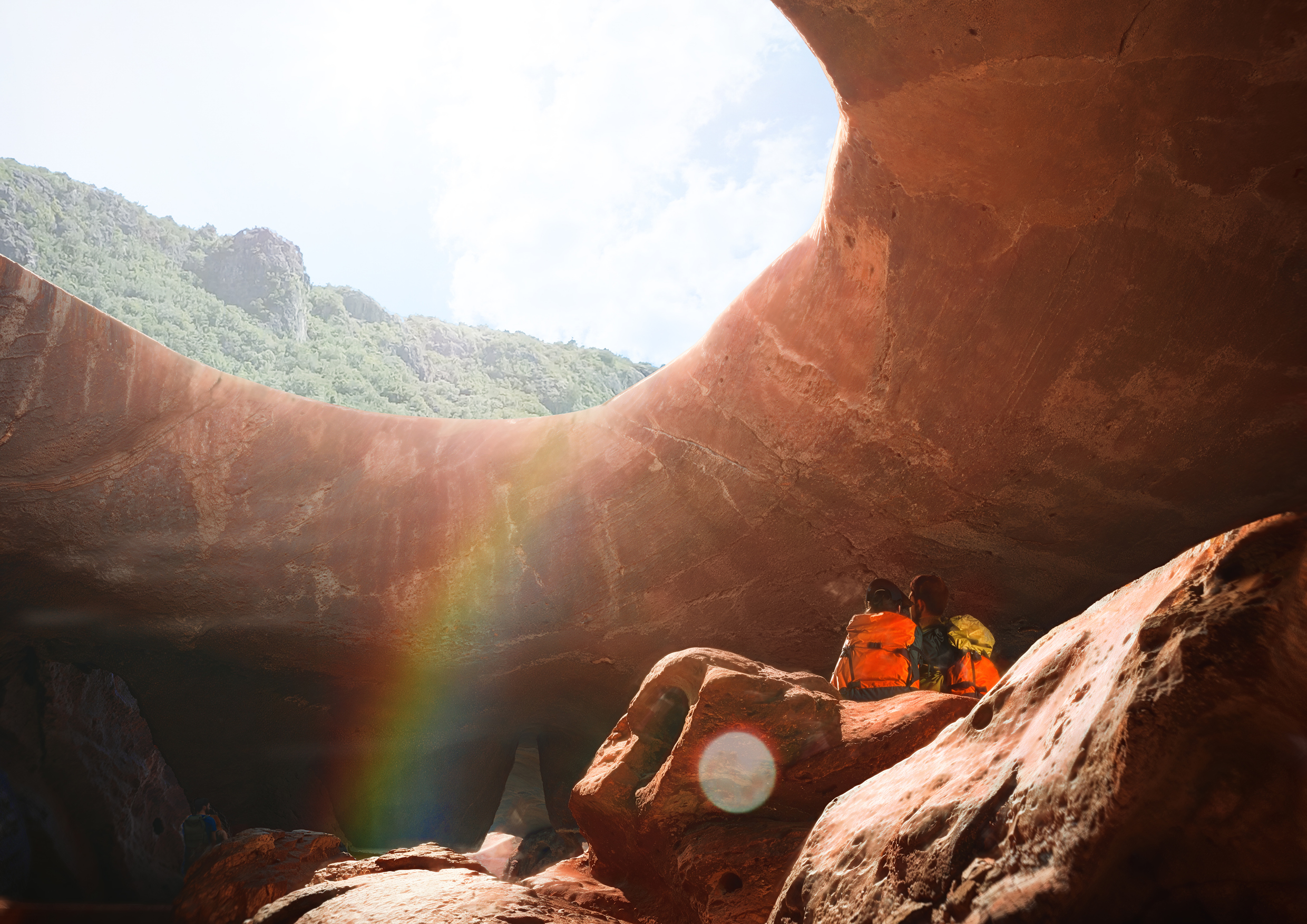
At the heart of the masterplan, the “Grotto-Cathedral” Interpretation Center is conceived as a series of spaces excavated into the existing hilly terrain. Its architecture draws on the geological layers of the site and the Algarve's long tradition of building with earth and stone, such as Grés de Silves, using locally available materials and adapting to the region's climate. High-thermal-mass walls, deep thresholds of dappled light and shade, naturally ventilated courtyards, and integrated water cisterns combine vernacular construction principles with advanced bioclimatic strategies to reduce heat gains and enhance thermal comfort during extreme heat summer.
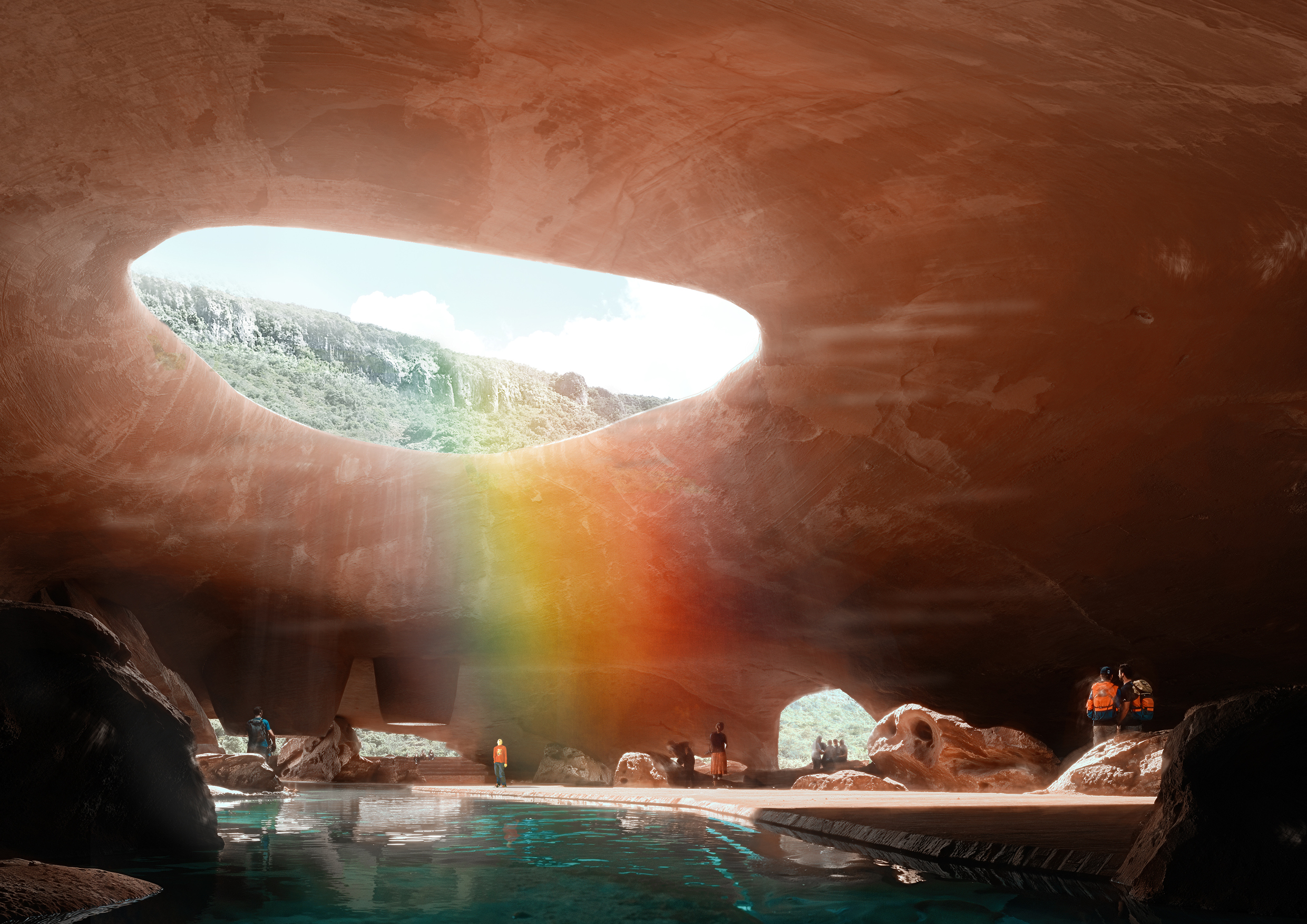
The building's section takes visitors on a journey through geological time, from spaces once occupied by ancient waters to the mountain's older rock formations. At a key moment, a large opening frames the sky and the top of Rocha da Pena, connecting the ancient water with the geological formations visible beyond. This encounter brings different periods of the landscape's history together in one space, allowing visitors to experience geological time through architecture, light, material, and the surrounding landscape.
The project was included among the flagship proposals supporting the successful candidacy of Algarvensis for designation as a UNESCO Global Geopark.
Client and Institutional Partners:
Municipality of Loulé, Algarve, Portugal
Associação Geoparque Algarvensis (AGA), Non-Profit Association
Team: Silvia Benedito (Partner) Daniella Slowick
Visualizations: LUXIGON, Eric de Broche des Combes