The Beastie: A Solar-to-Ice Pavilion in Queens, NYC
Invited Competition MoMA PS1 Young Architects Program, 3rd Prize | 2018 | New York City, USA
The Beastie reflects on the relationship between humans and their atmospheric environments. Drawing upon a genealogy of climatic “monsters,” from Dracula and Frankenstein to Godzilla, that emerged in the cultural imagination during periods of ecological disturbance, The Beastie becomes an architectural analogue to today’s climatic disruptions: a thermally responsive pavilion at MoMA PS1 in Queens that transforms solar energy into ice, creating an uncanny cooling experience through conduction and radiative heat exchange.
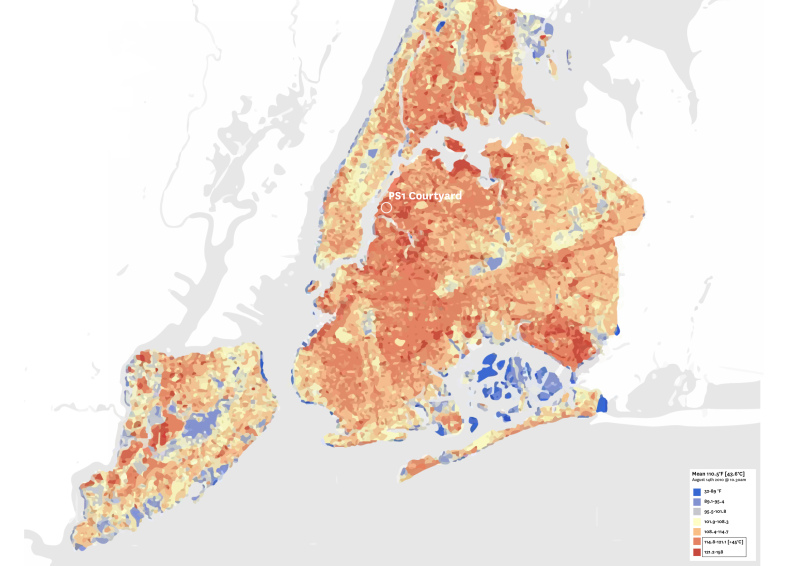
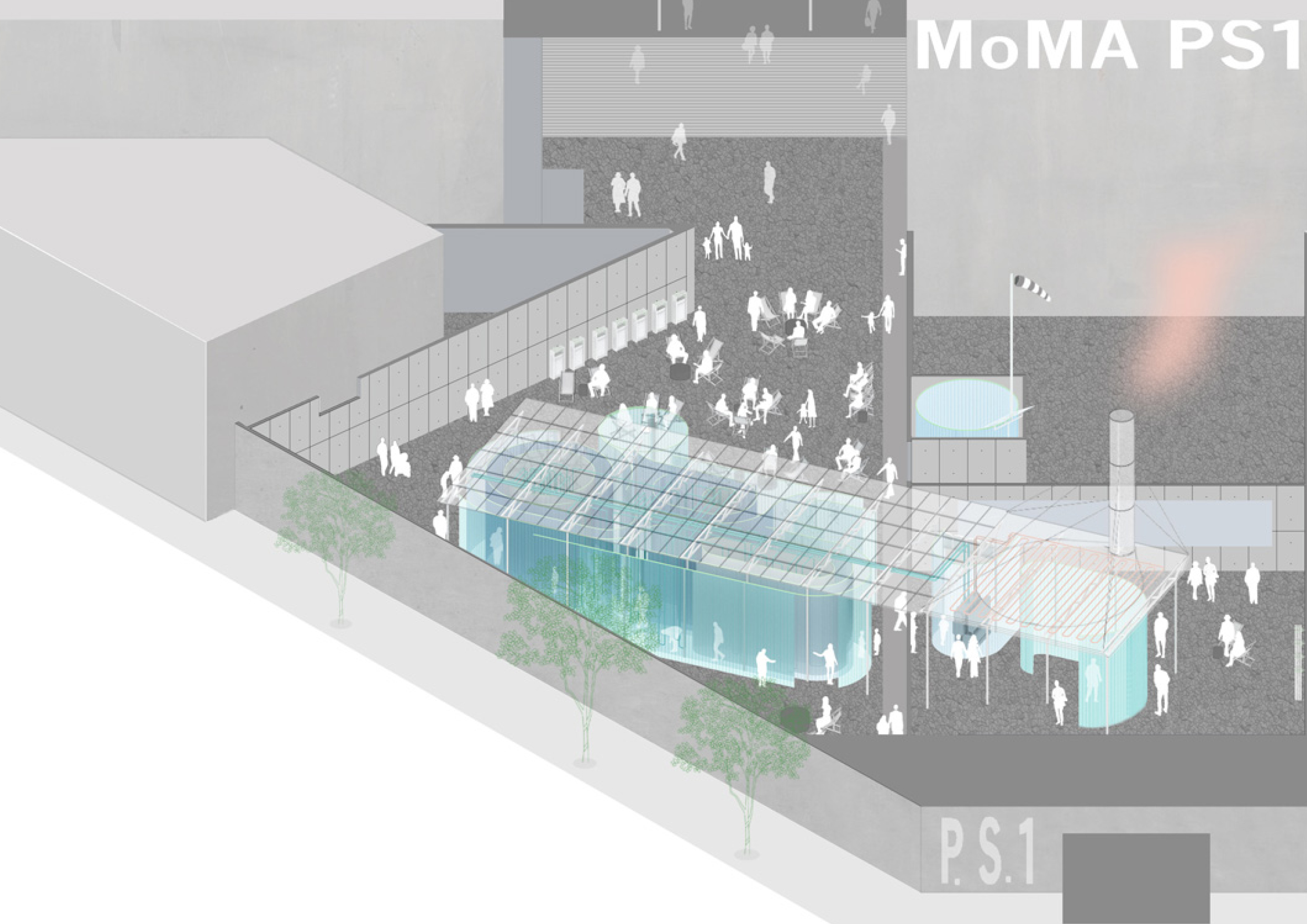
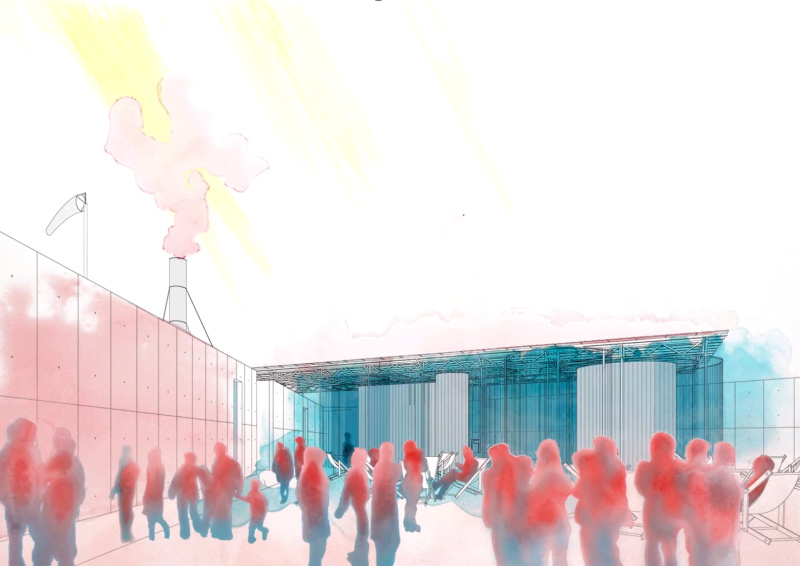
Developed for the MoMA PS1 Young Architects Program, the project responds to the competition’s ambition to provide an innovative and sustainable cooling prototype during New York City’s hot and humid summers. Located within one of the city’s most heat-exposed urban areas, The Beastie turns intense solar radiation and atmospheric humidity into the very matter of design, generating an immersive cooling experience of wonder and thermal pleasure.
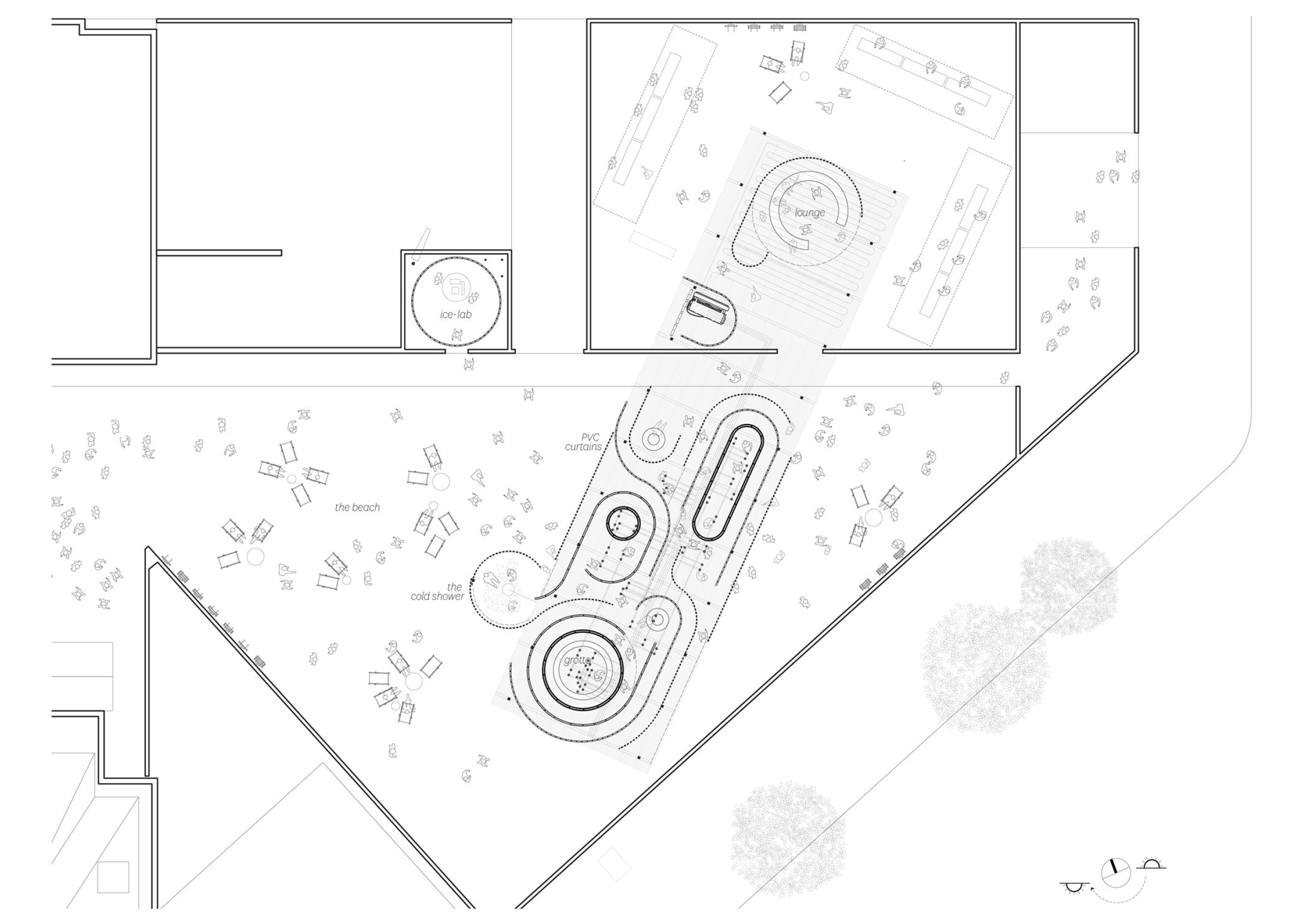
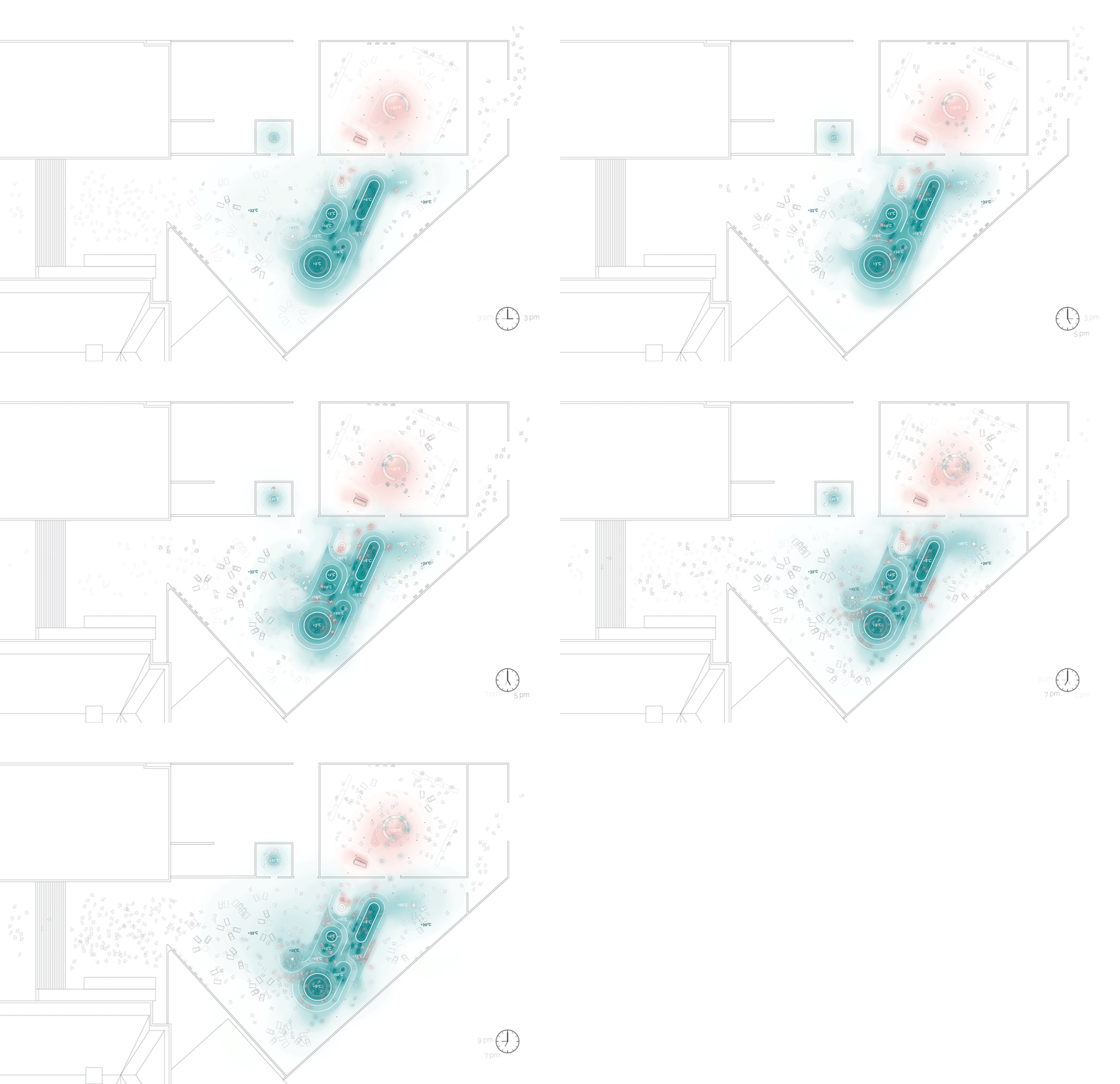
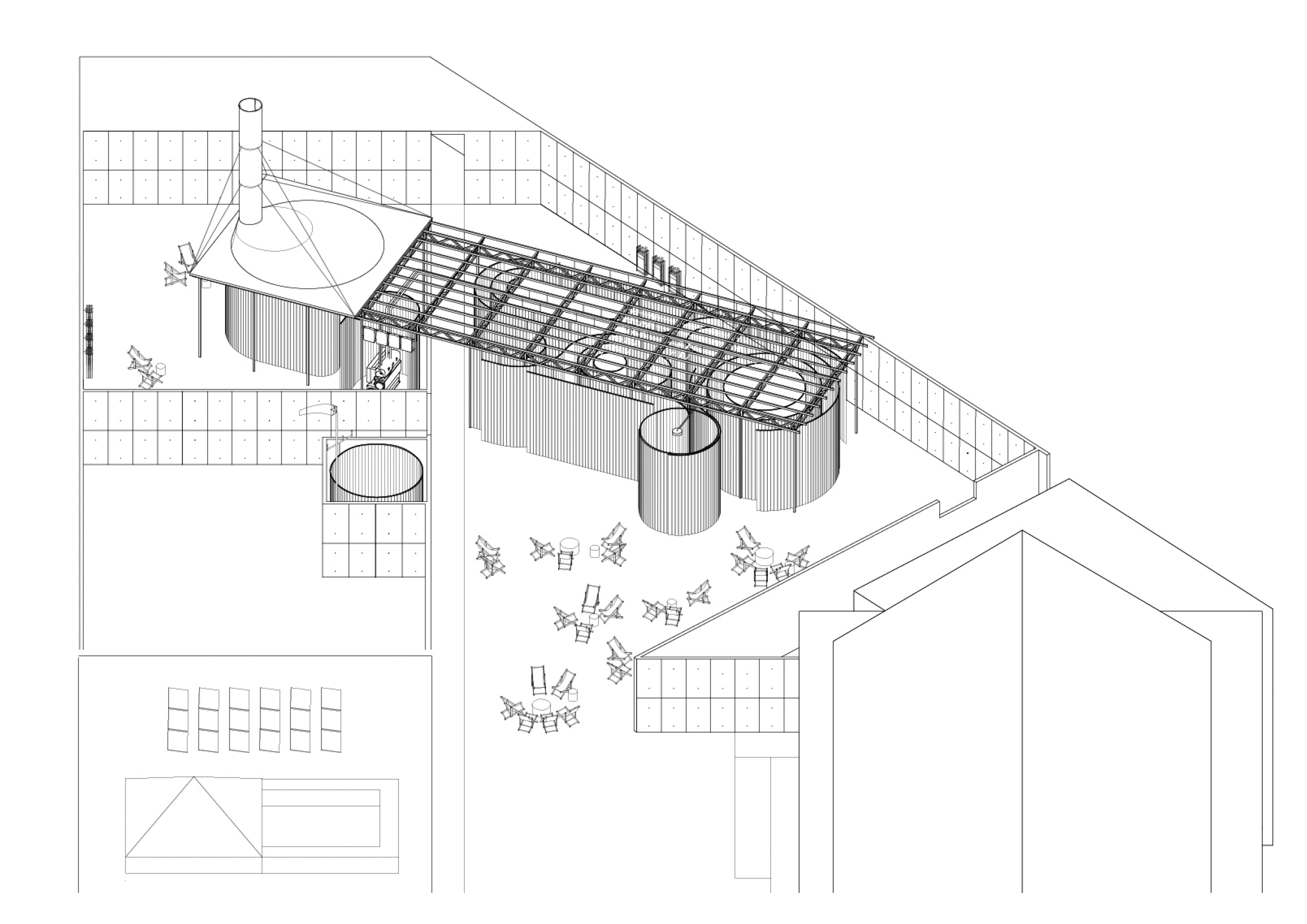
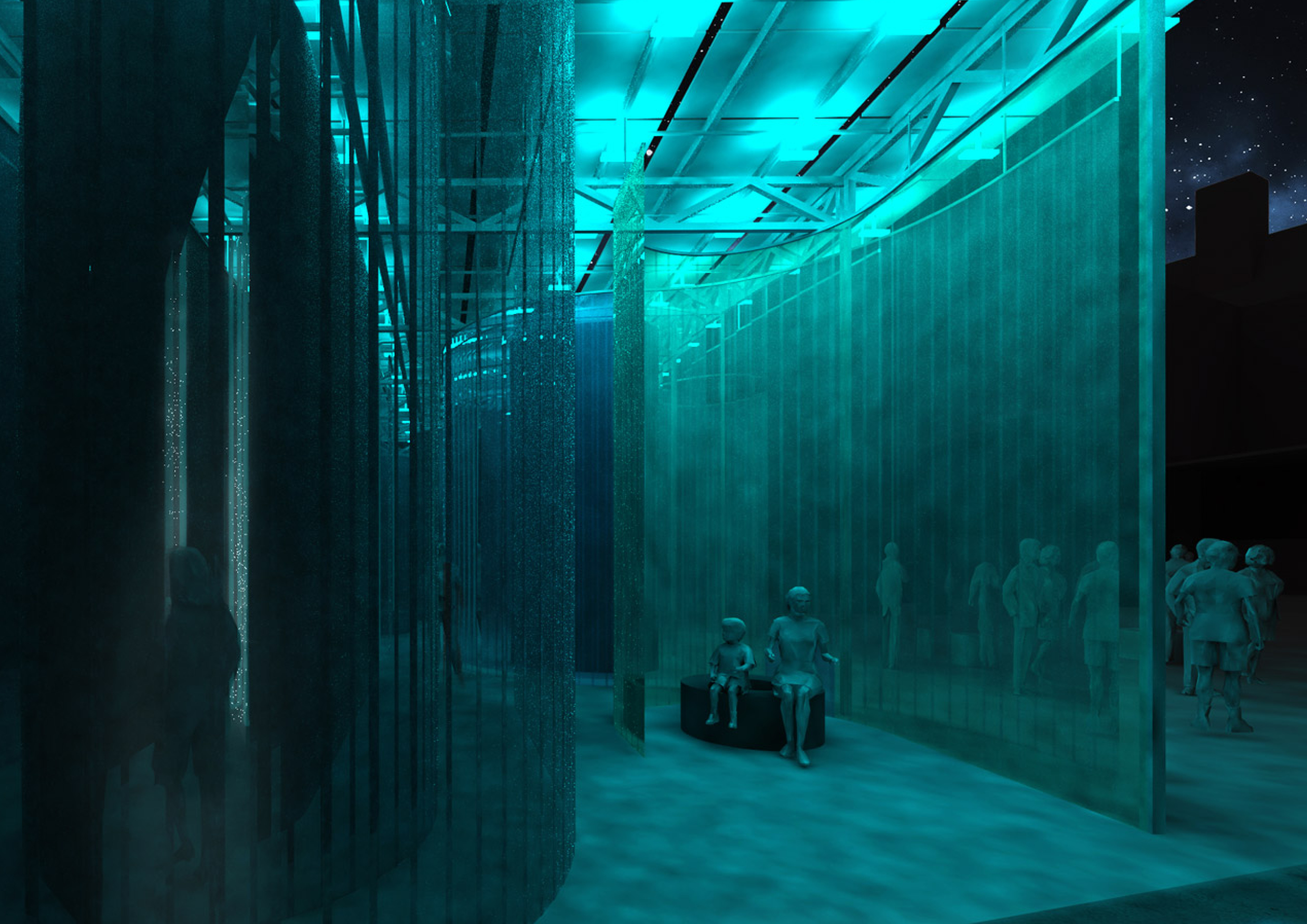
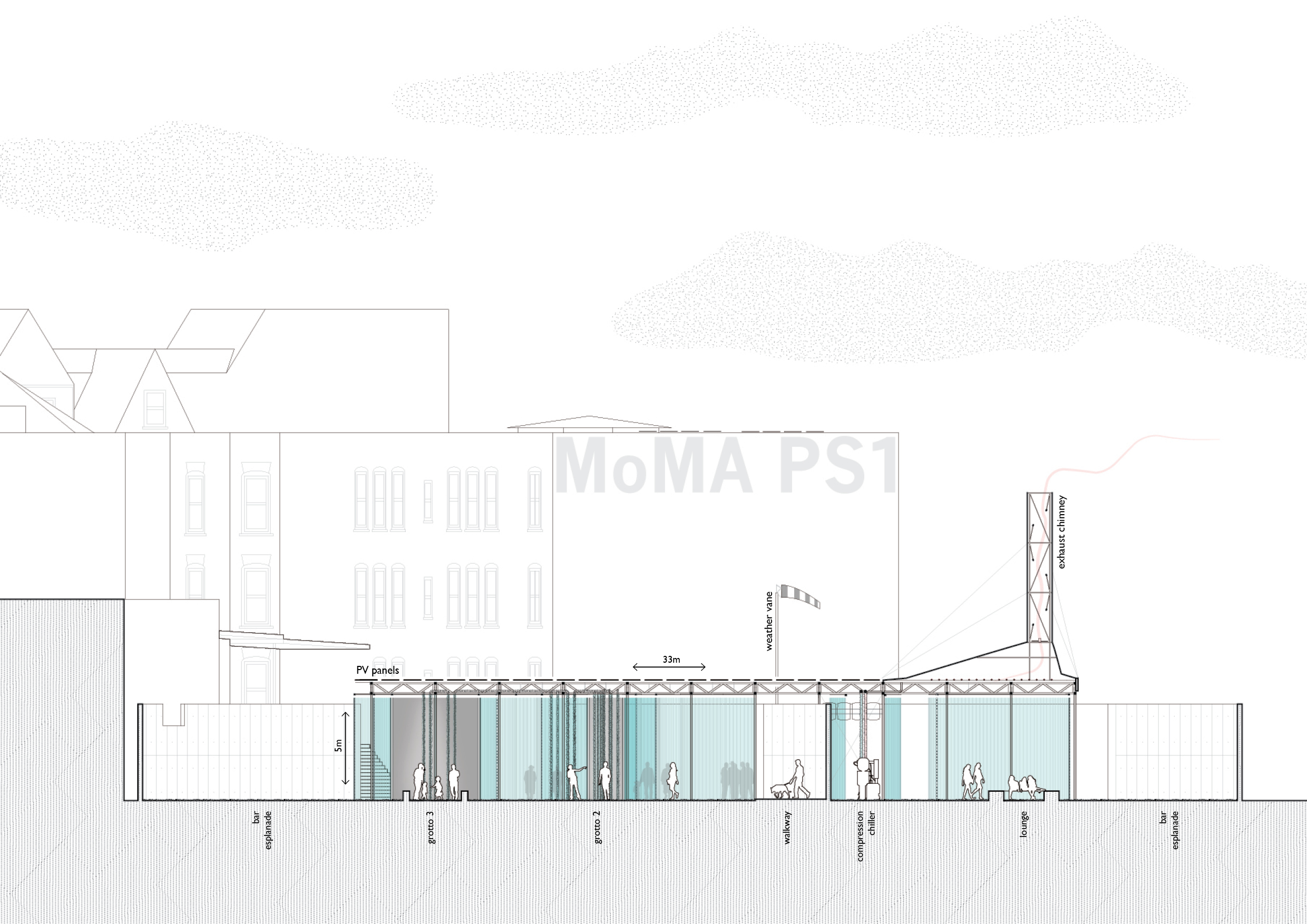
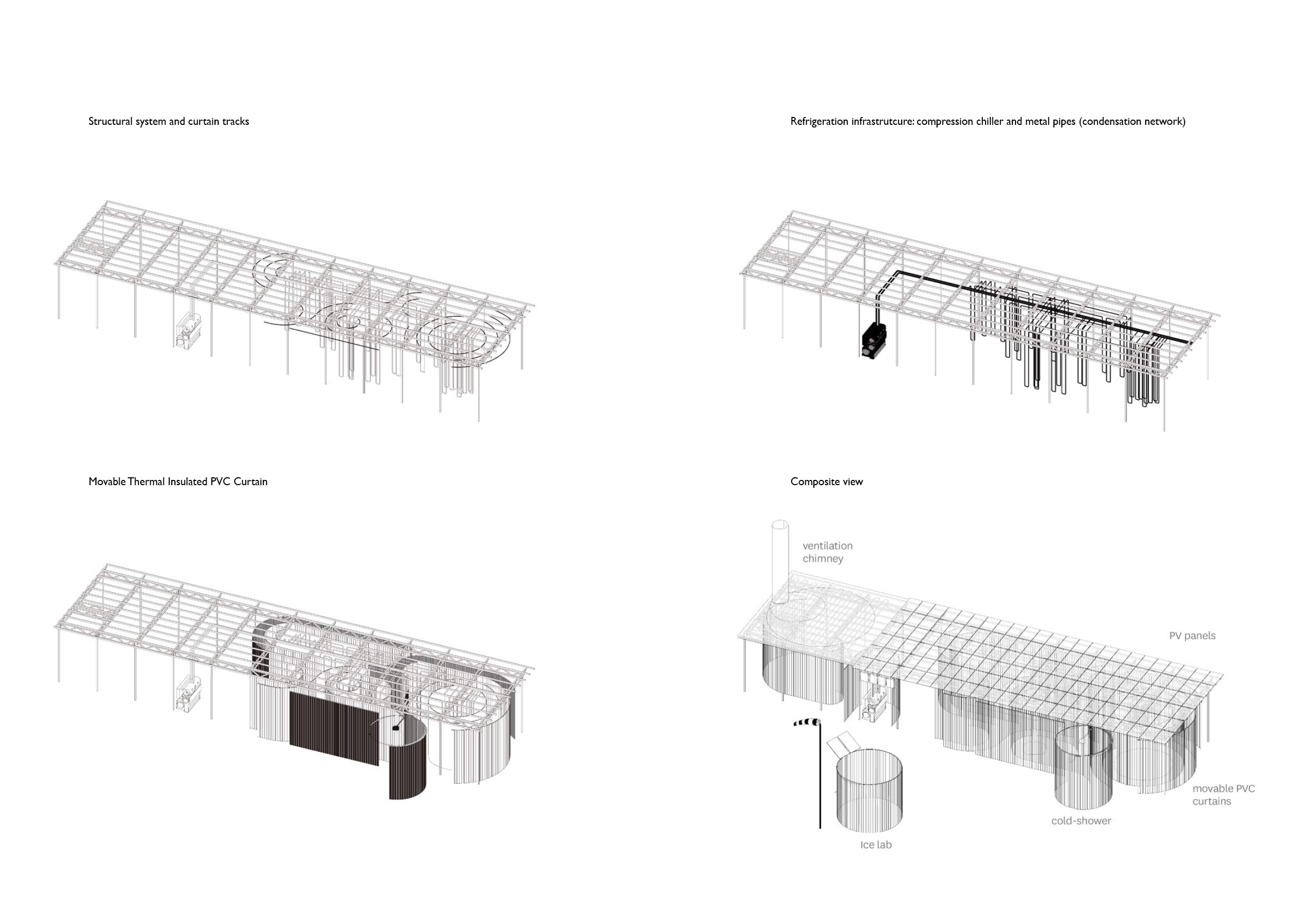
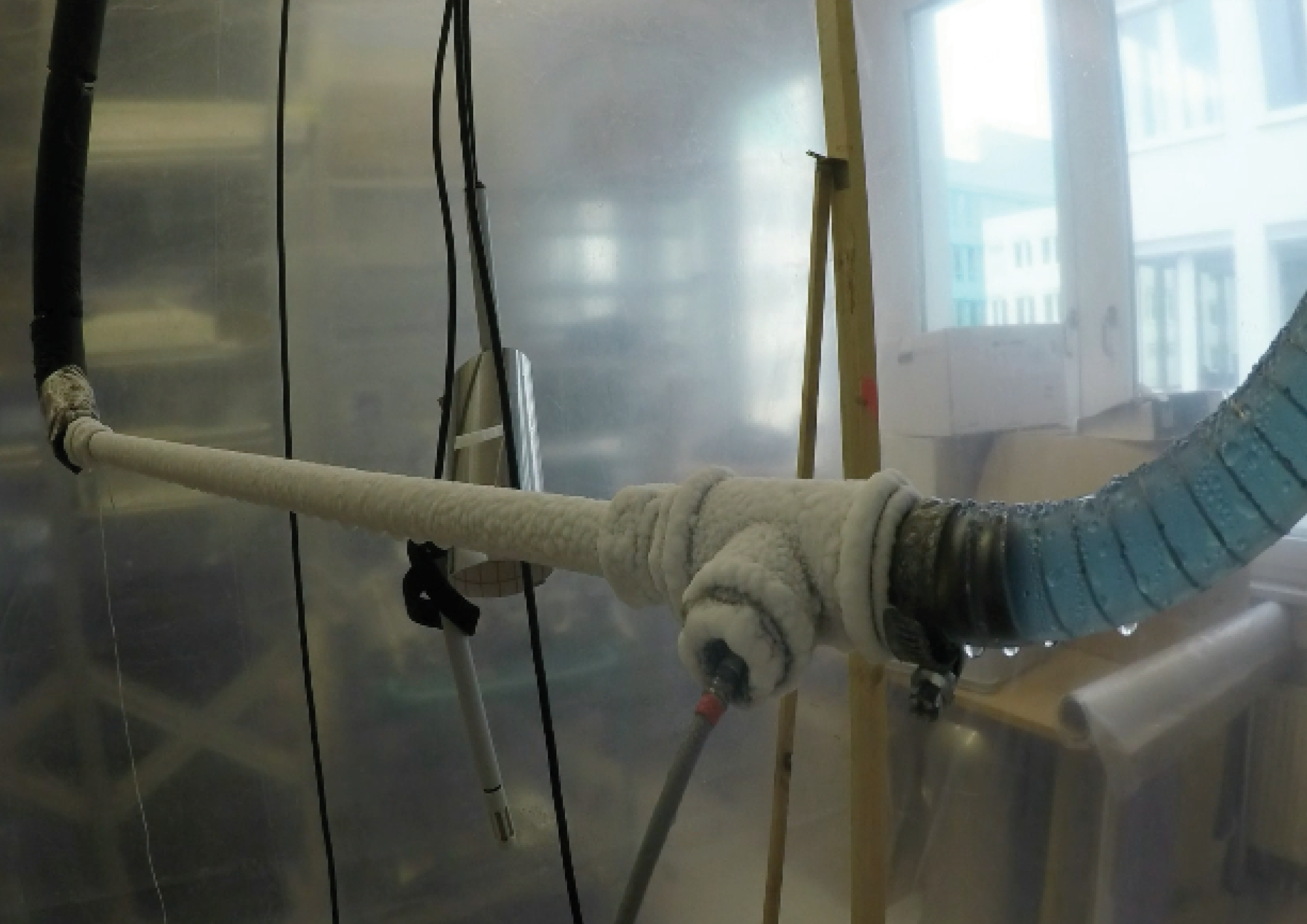
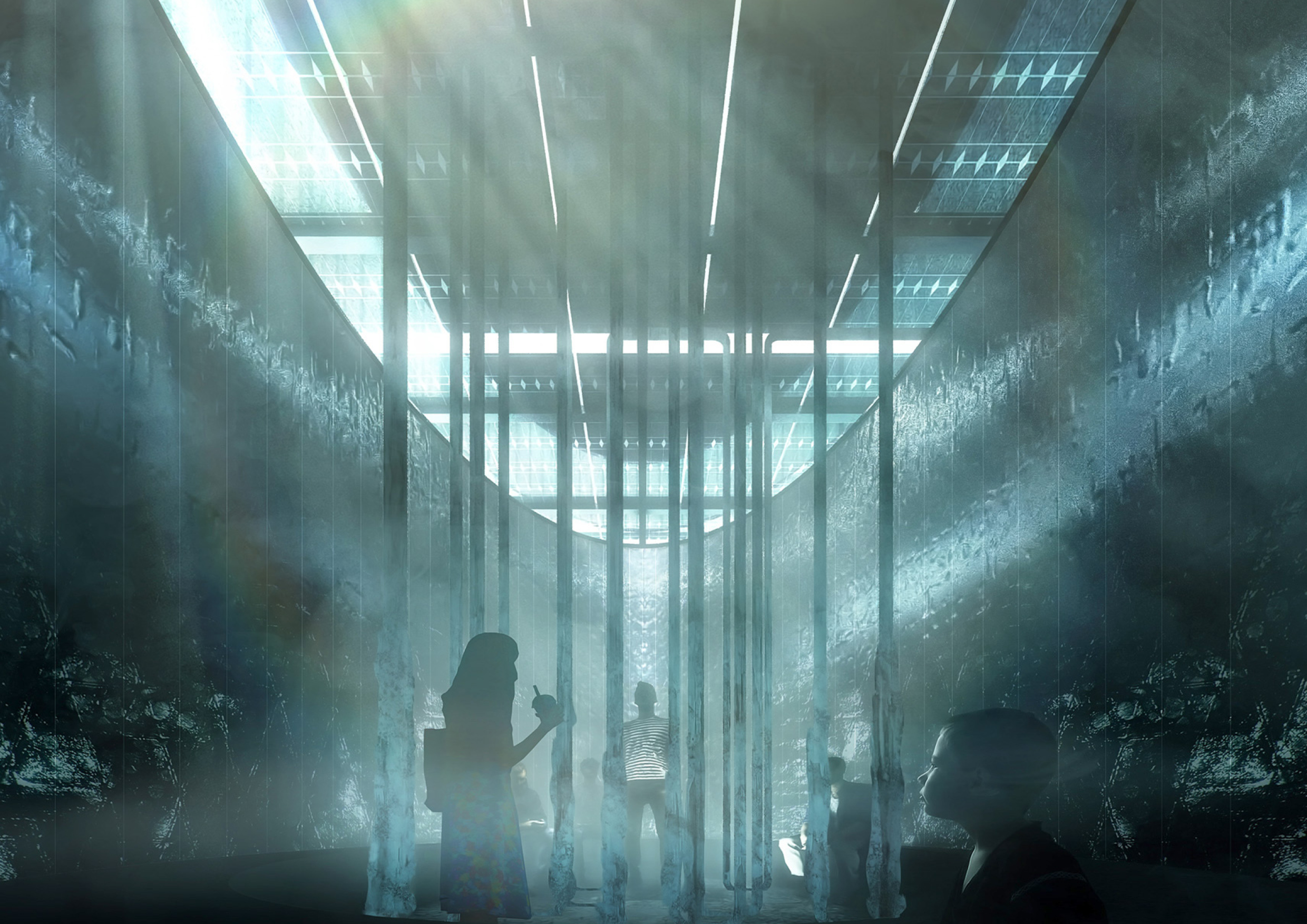
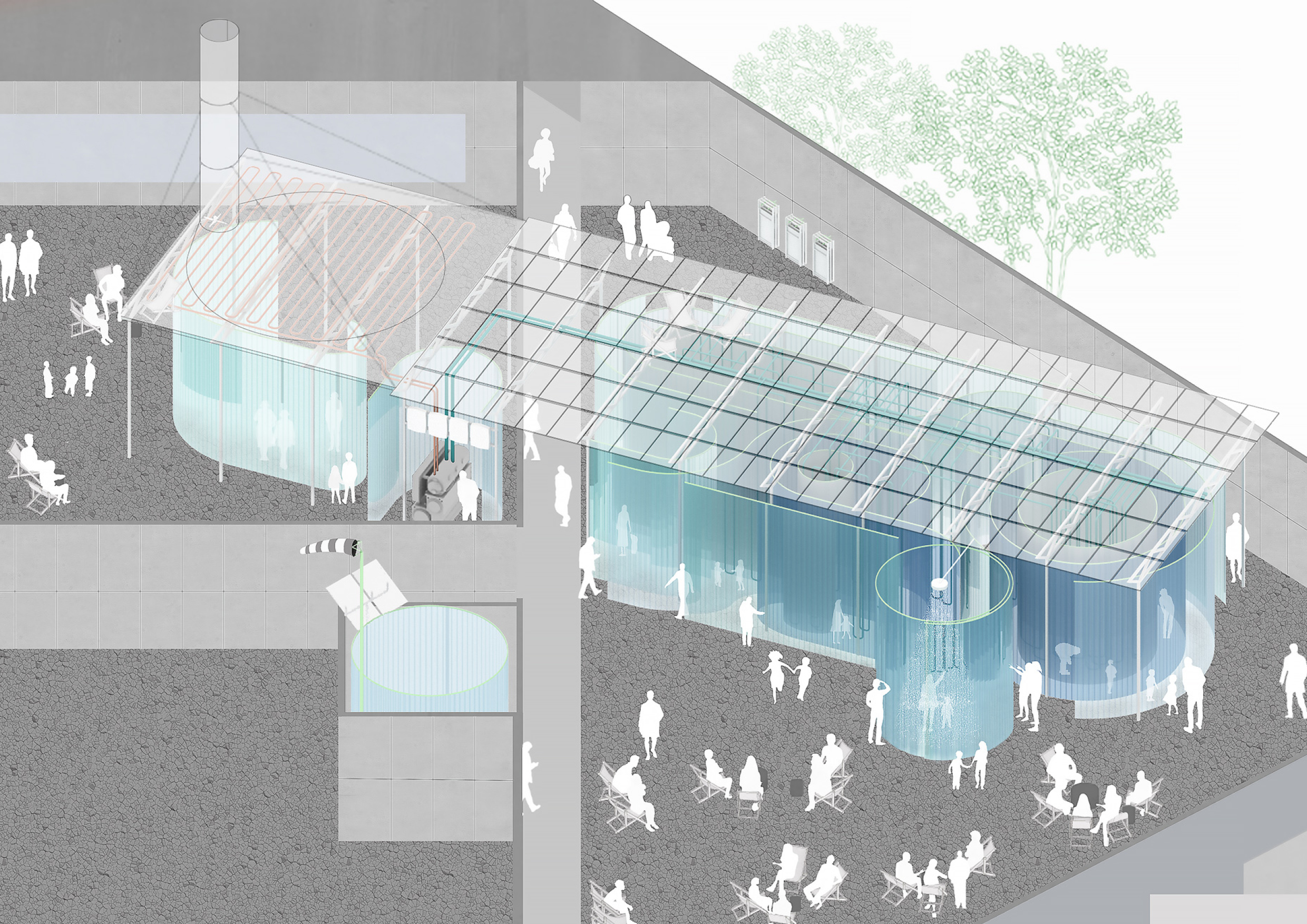
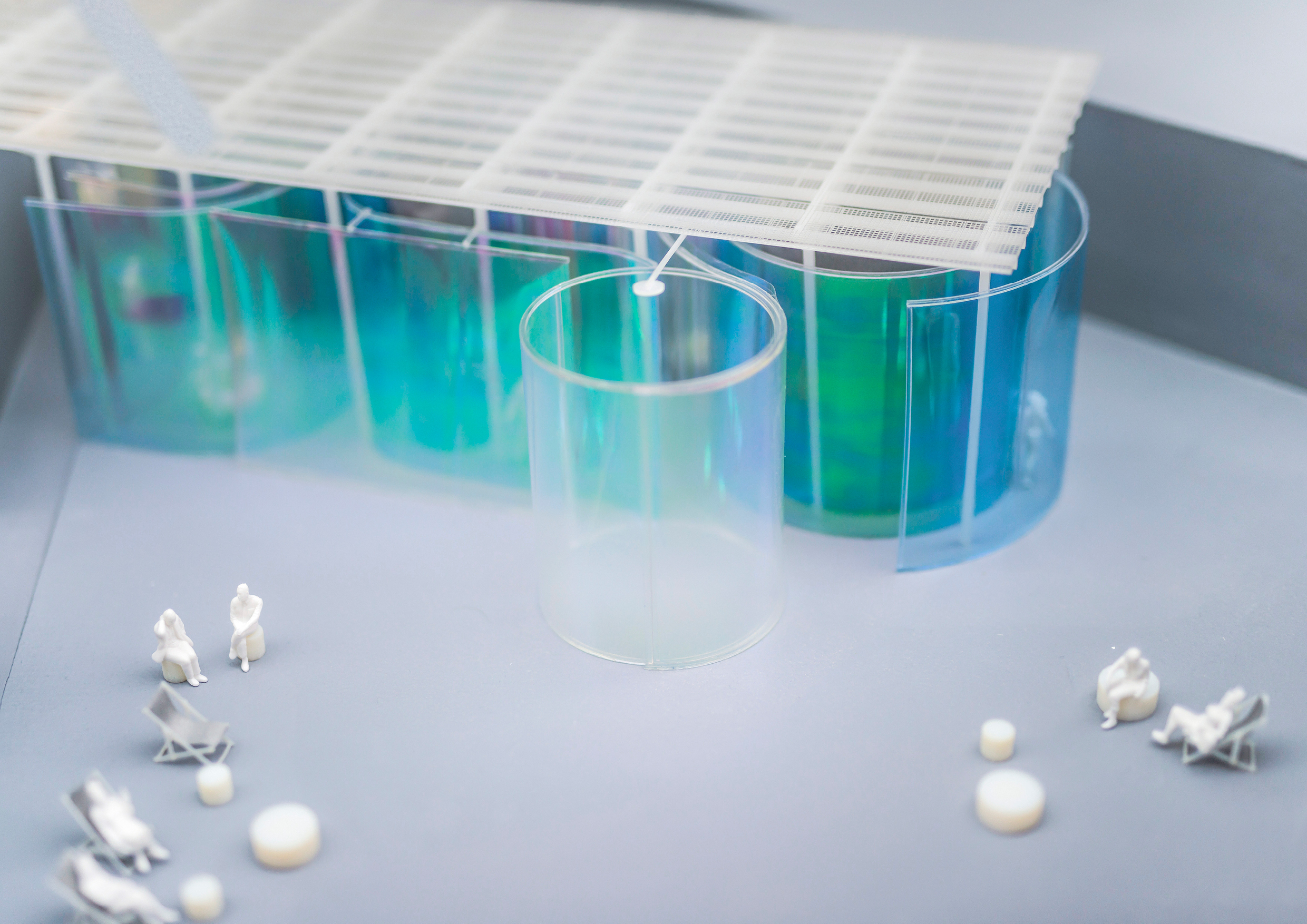
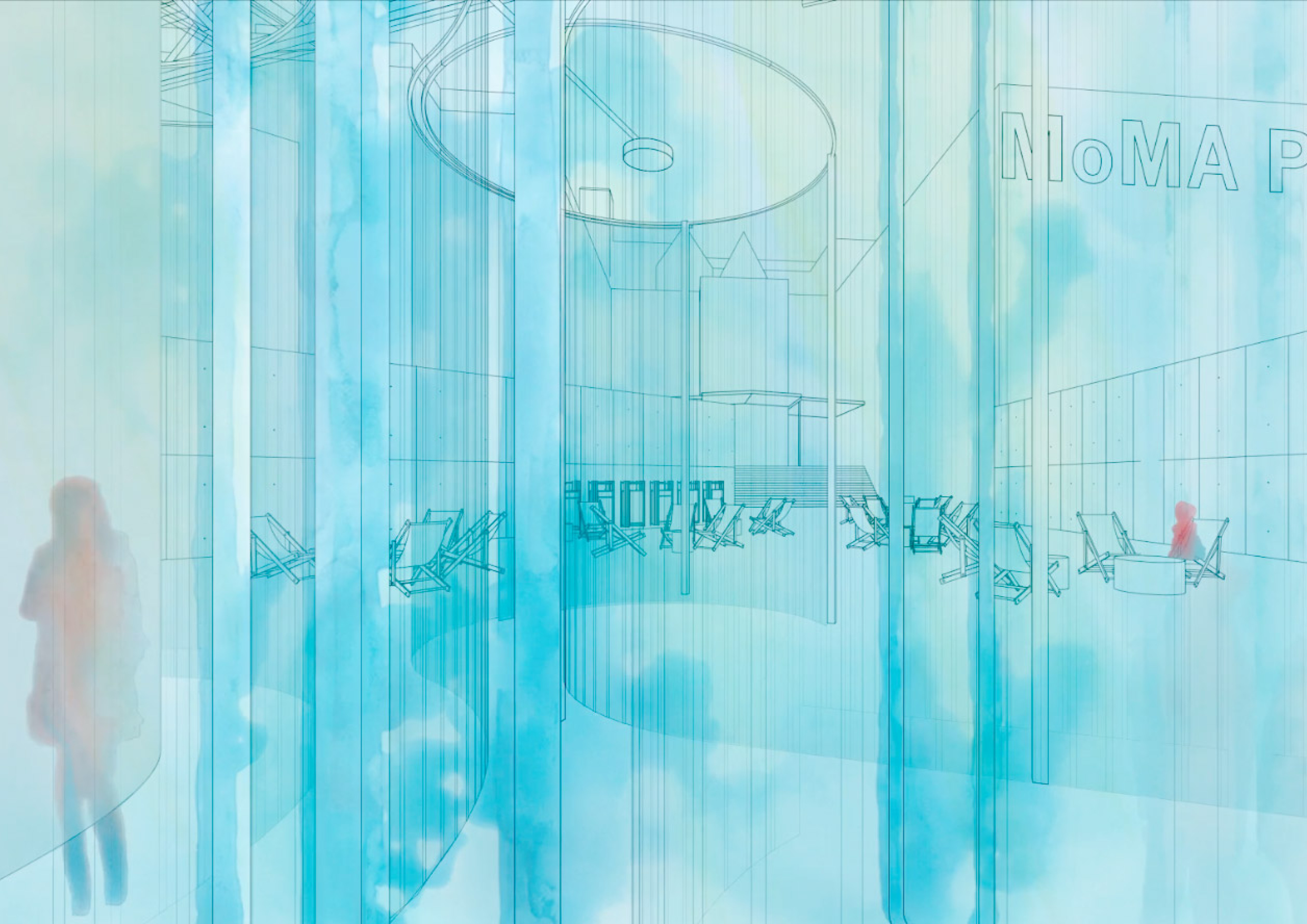
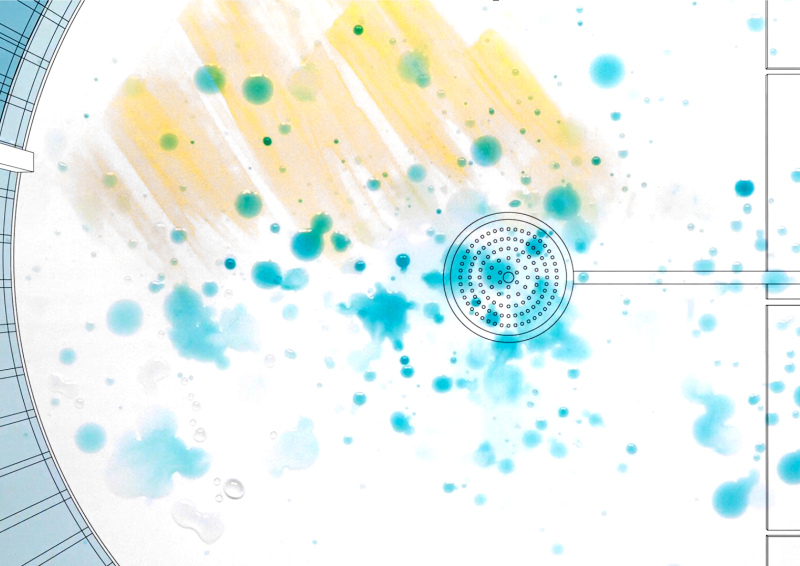
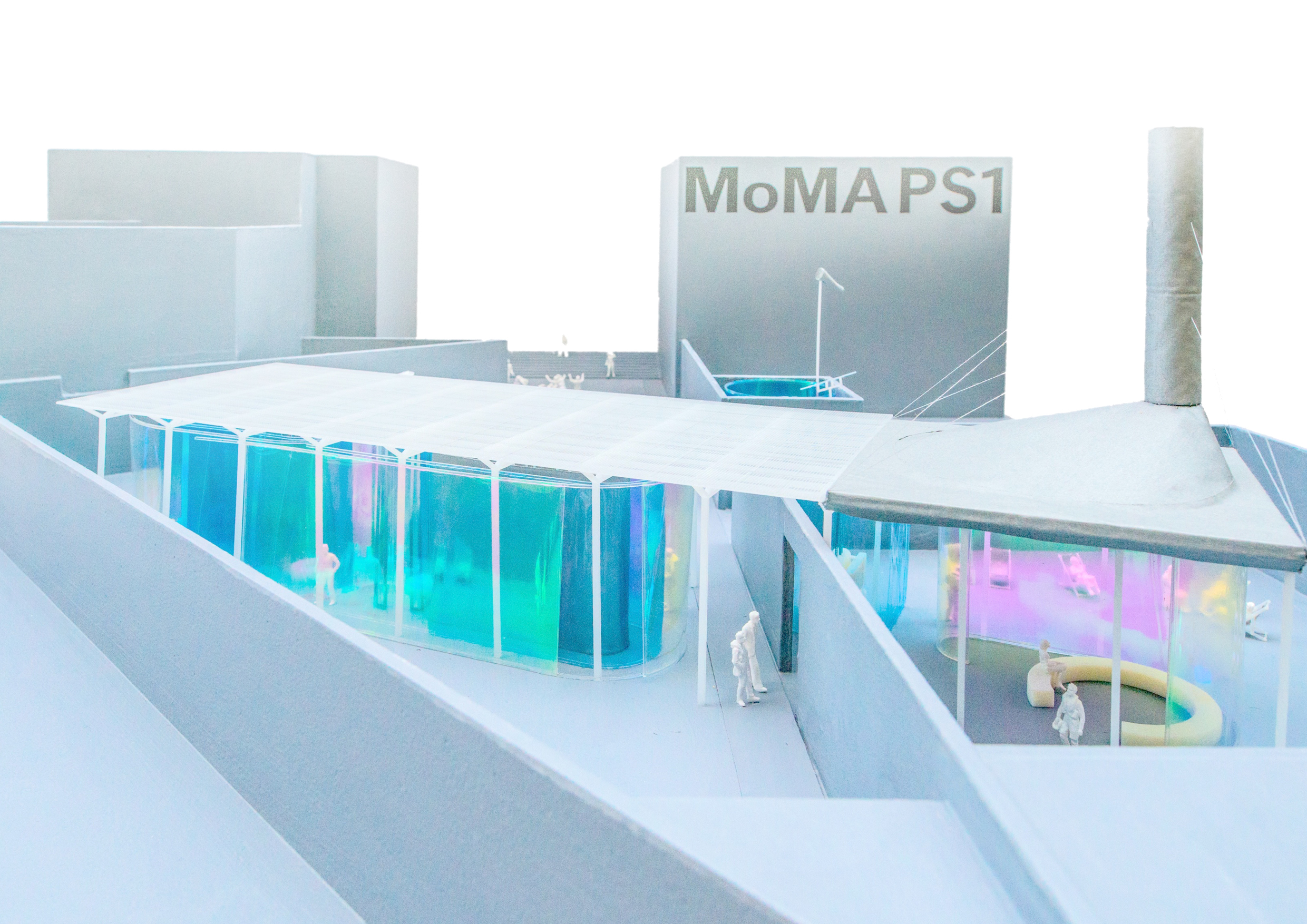
The pavilion challenges conventional air conditioning by harnessing solar energy through PV panels to power a compression chiller that circulates sub-zero cooling fluid through a forest of vertical pipes. Atmospheric water vapor condenses and freezes on their surfaces, forming an evolving landscape of ice. Enclosed by low-emissivity (Low-E) insulating curtains and translucent, movable screens, a sequence of climatic grottos and thermal thresholds offers visitors a choice of environments, from gently cooled spaces to icy chambers. Its structural system employs modular greenhouse components, designed for assembly, disassembly, and redeployment in other hot and humid environments. Developed in collaboration with TRANSSOLAR, the proposal anticipated a reduction of approximately 6°C in perceived temperature relative to outdoor conditions.
The Beastie transforms the thermodynamic processes of condensation, solidification, and melting into an interactive spatial experience, continuously influenced by the body heat, breath, and movement of its inhabitants. Visitors navigate gradients of cold and reconfigure thermal boundaries through movable screens, while their presence affects the accumulation and melting of ice. These reciprocal exchanges transform the pavilion into a living climatic laboratory, where thermal comfort becomes a matter of individual choice and collective interaction, revealing the dynamic relationship between human bodies and their atmospheric surroundings.
Thermodynamic processes become design matter in The Beastie, making otherwise invisible atmospheric exchanges perceptible. The project draws upon a history of architecture as an instrument of climatic mediation—from the Persian ice houses (Yakhchāls) and their ingenious cooling systems to greenhouses and biospheres—reinterpreting these traditions through contemporary technologies and embodied interaction. As ice melts under the heat and breath of its inhabitants, The Beastie mirrors our own climatic vulnerabilities, reminding us that, like the ice itself, we too can yield to the pressures of a changing climate, even as active agents in its transformation.
Competition and Institutional Partners: The Museum of Modern Art (MoMA), MoMA PS1, Young Architects Program (YAP)
Team: Silvia Benedito and Alexander Häusler (Partners)
Larissa Belcic, Lauren Seowon Choi, Nicholas Jungblut, Dohyun Lee, Yixin Li, Carson Booth, Parawee Wachirabuntoon, Estello-Cisdre Raganit, Amanda Ton, Jena Tegeler, Zeqi Liu, Tim McDowd, Gabriella Solange Rodriguez-Berrios, Alison Malouf, Euipoom Estelle Yoon
TRANSSOLAR Climate Engineering: Dr. Matthias Schuler (Partner), Peter Zatko, Phillip Kunze, Felix Thumm, Pratik Raval
KNIPPERS HELBIG Structural Engineering: Thorsten Helbig, Florian Meier, Ruben Heiming, Huberst Chang
KIPPKITTS Engineering Consultant: Kipp Bradford
LUXIGON Visualisations: Eric de Broche des Combes