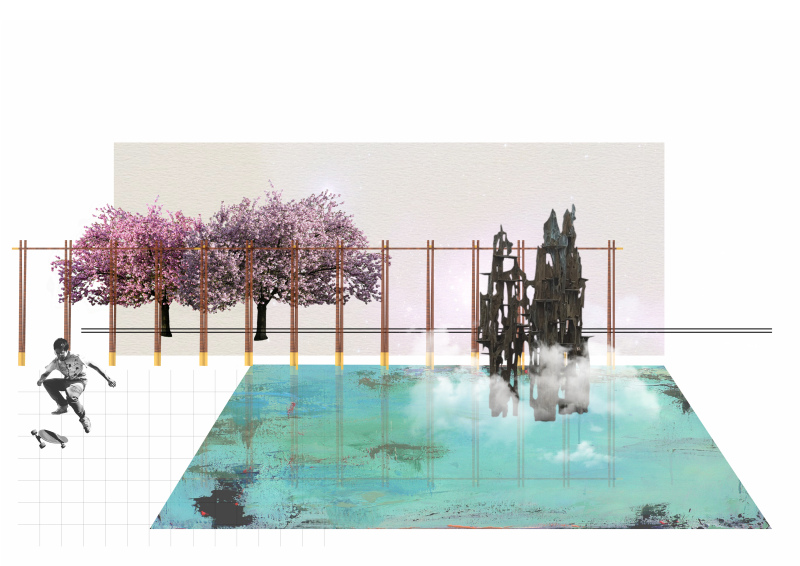
Woodrow Wilson "Marker" at Princeton University
Woodrow Wilson Marker Invited Design Competition | 2017 | Princeton, New Jersey, USA
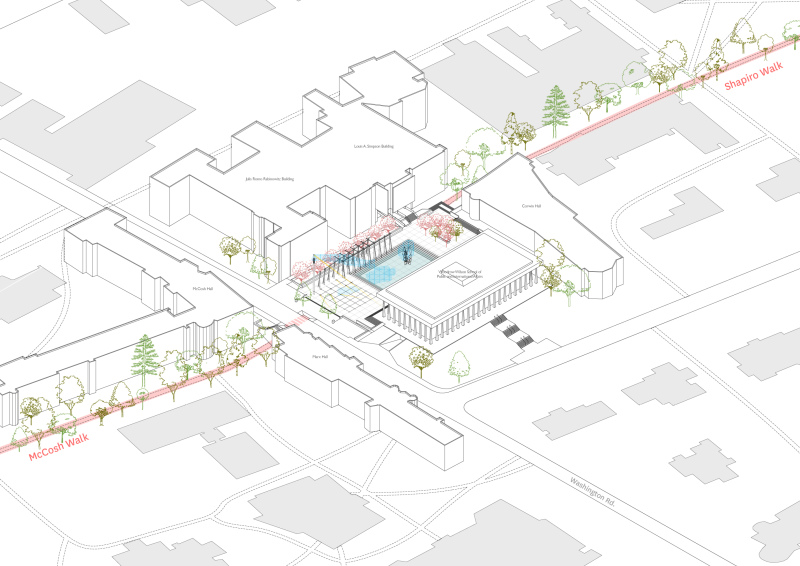
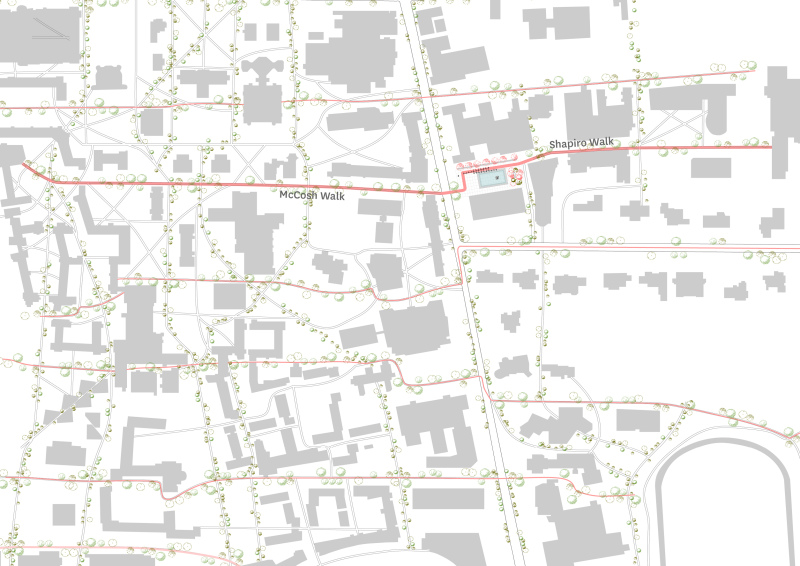
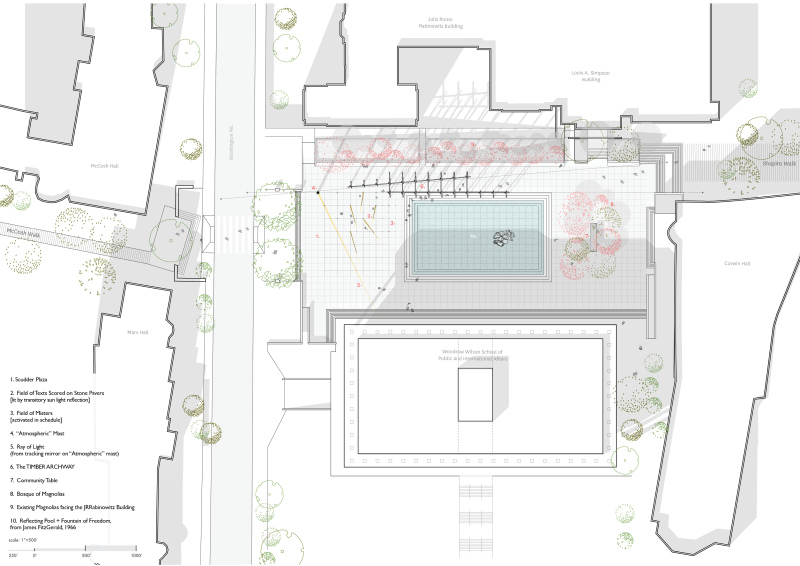
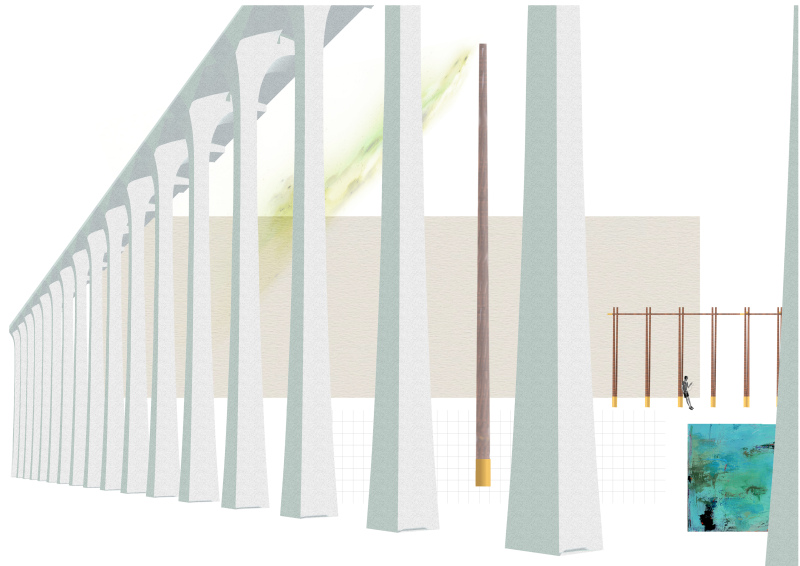
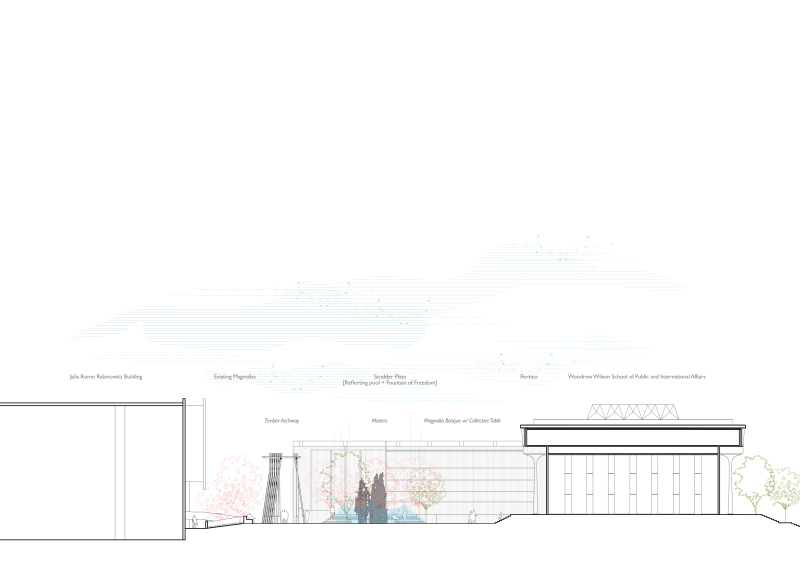
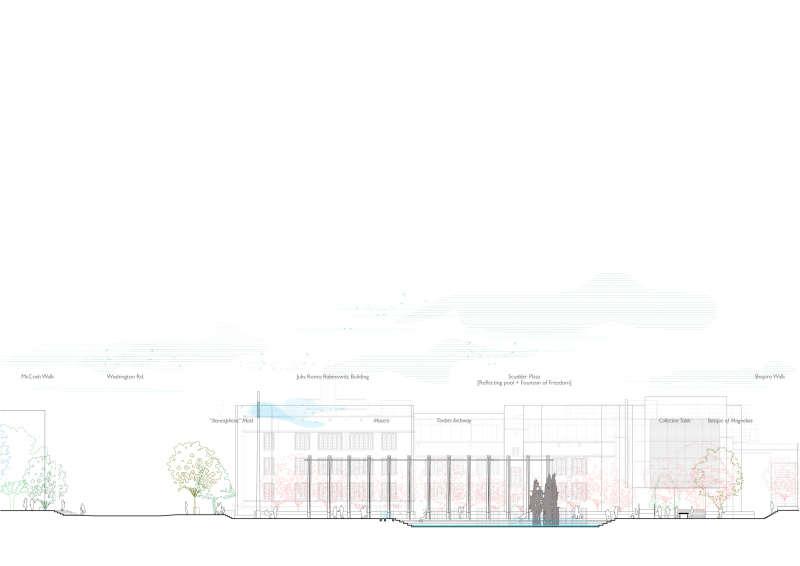
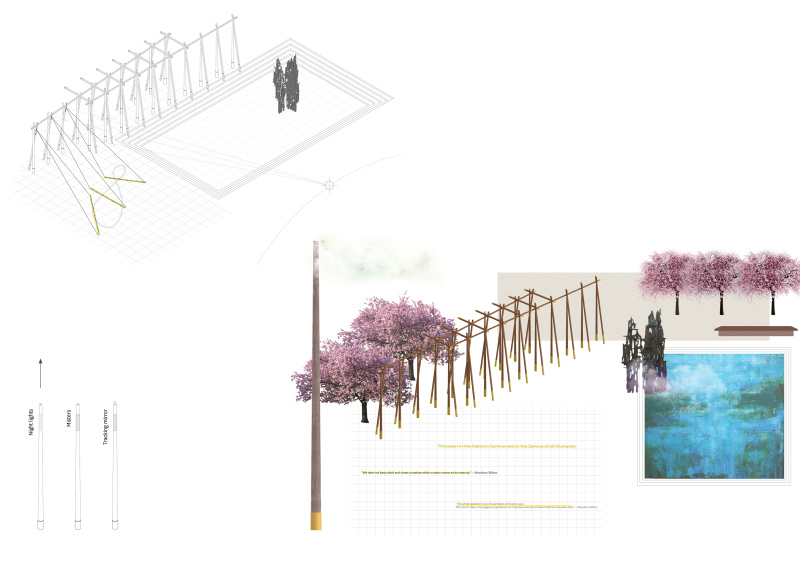
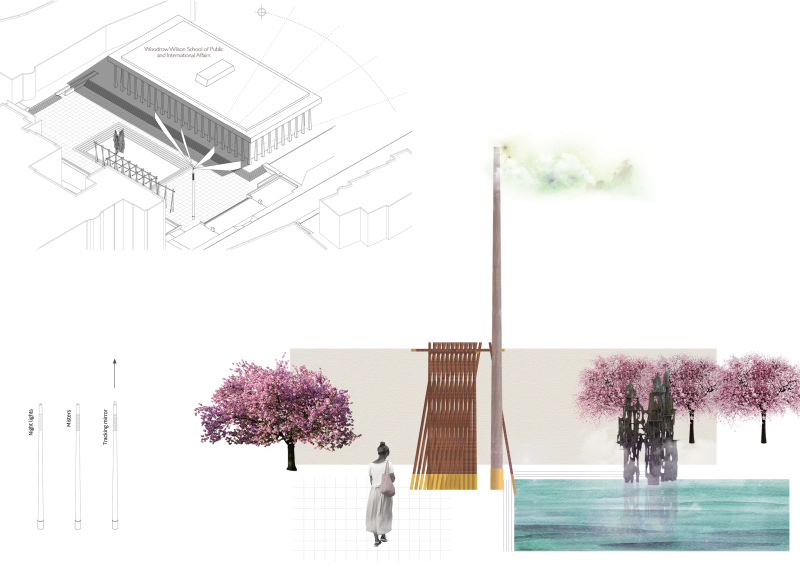
The Princeton Marker competition reflects on Woodrow Wilson's contested legacy at Princeton University and beyond. The project transforms Scudder Plaza into a civic landscape for historical reckoning and collective life in the campus, reconnecting McCosh Walk and Shapiro Walk through a new timber archway. Its soft, organic, and vulnerable presence stands in dialogue—or gentle confrontation—with the monumental concrete portico of the Woodrow Wilson School of Public and International Affairs. Acting as a counter-stoa, the wooden structure evokes negotiation and resistance through which communities claim visibility and belonging.
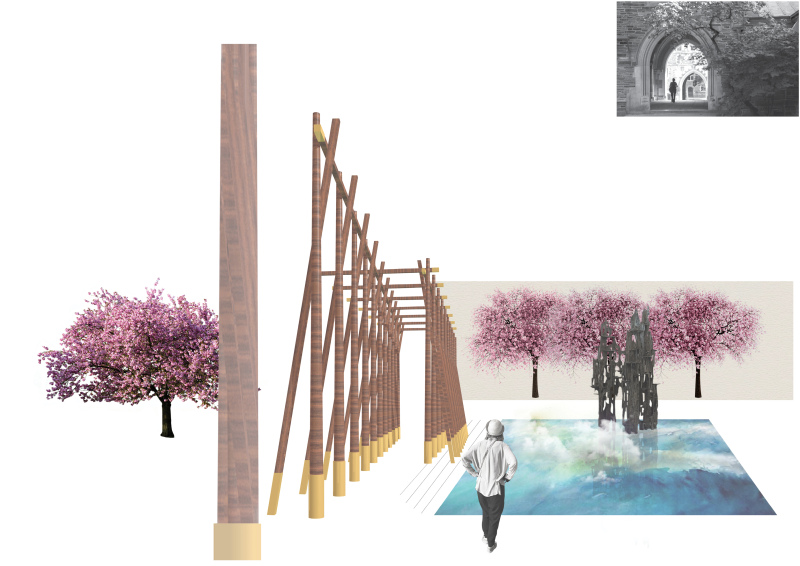
The design process engaged students, alumni, and members of the university community in a series of conversations that grounded the project's spatial ambitions in collective reflection on Princeton's historical legacy and experiences of inclusion and exclusion. From these exchanges emerged the concept of heroic vulnerability , inspired by the recent events in Baton Rouge, where Ieshia Evans stood peacefully before heavily armed police officers during a Black Lives Matter protest. Captured in Jonathan Bachman's iconic photograph, her quiet yet determined stance embodied the courage of individual resistance and collective consciousness in the face of institutional power. This act of peaceful defiance became the grounding of the central elements in the proposal: a timber archway as an organic architectural element—simultaneously strong and vulnerable, honoring those who stand their ground in pursuit of social justice.
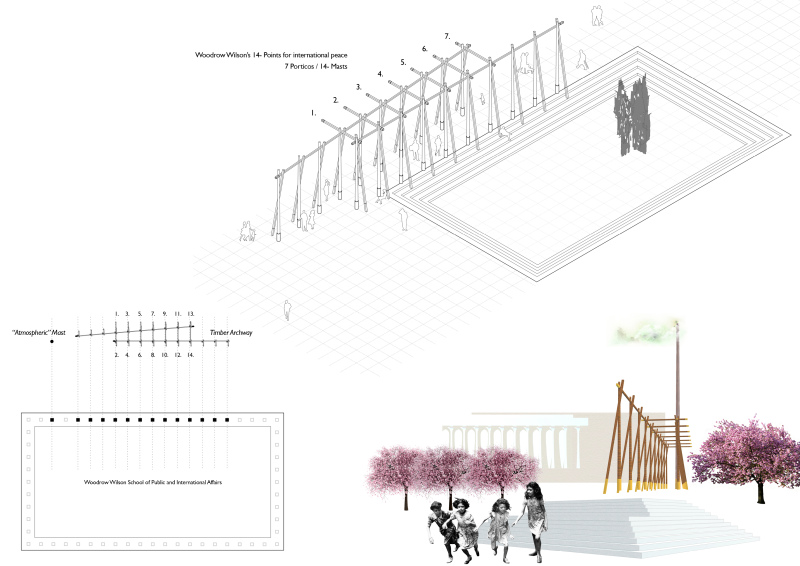
Beyond its symbolic significance, the timber archway extends Princeton's architectural tradition of thresholds marking moments of passage, transition, and acknowledgment. Comprising fourteen lines of interlocking timber columns referencing Wilson's Fourteen Points for international peace, the structure establishes a new passage between McCosh Walk and Shapiro Walk, inviting encounters and collective gatherings.
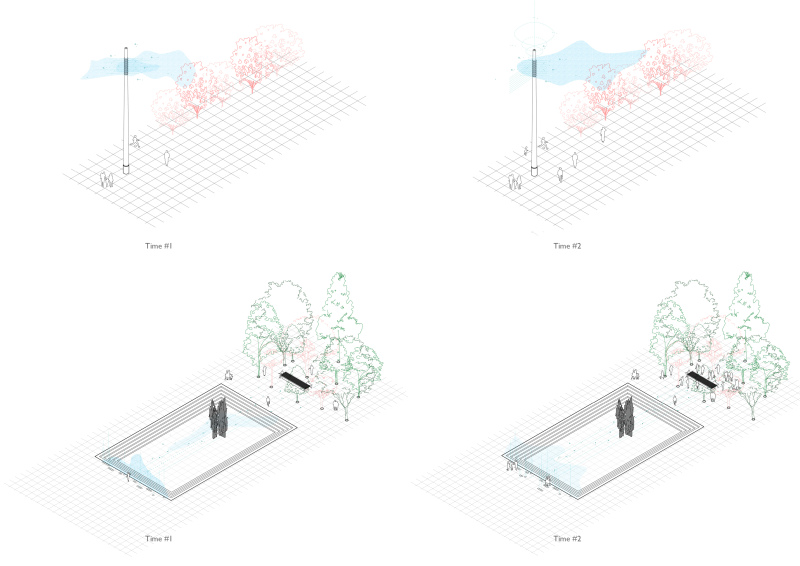
While the archway embodies the permanent dimension of the project, two additional temporal dimensions expand the marker's presence: the ephemeral and the cyclical. The ephemeral is expressed through an atmospheric mast that, like a weathervane, registers changing atmospheric conditions and the passage of time. Equipped with a solar-tracking mirror, the mast directs reflected sunlight into the shadows cast by the Woodrow Wilson School across Scudder Plaza, periodically illuminating selected texts inscribed in the stone paving. Misting devices generate transient clouds dispersed by prevailing winds, making atmospheric phenomena perceptible and transforming the diurnal cycle into an act of remembrance.
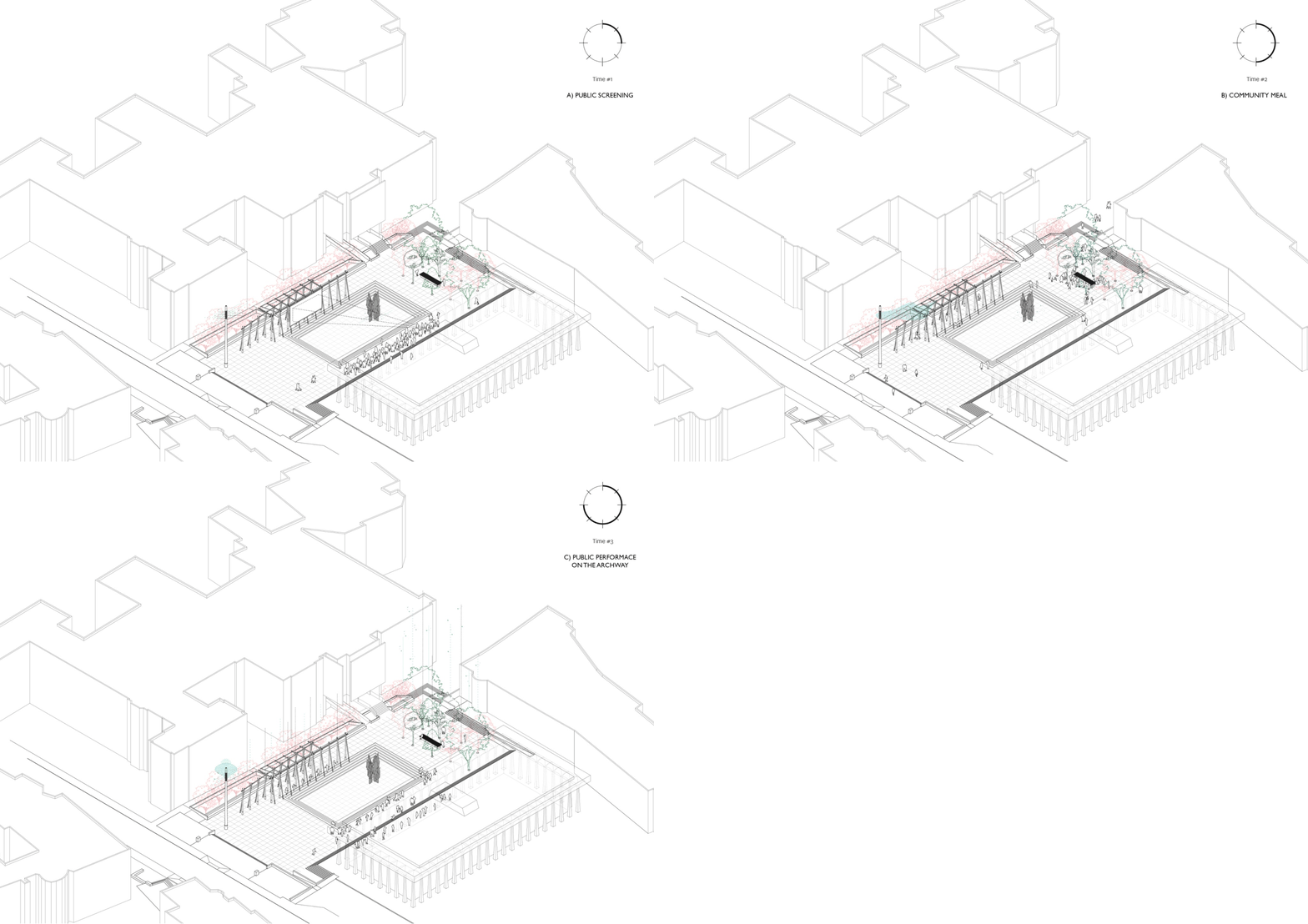
The cyclical dimension unfolds through a year-round program of performances, public screenings, commemorations, and community gatherings, drawing on the cultural life of Princeton University and the surrounding community. These recurring events bring together diverse voices and perspectives, revisiting histories of inclusion and exclusion through collective participation. Supporting this civic life, a new a new magnolia bosque along the plaza's eastern edge reinforces the existing tree canopy, creating a cooler summer microclimate. Beneath its shade, a long timber table invites shared meals and informal gatherings, extending the plaza into a landscape of encounter and dialogue.
Together, these spatial and temporal interventions transform Scudder Plaza into a living framework for heroic vulnerability, where historical memory is continually revisited through public engagement. Rather than a static monument, The Princeton Marker celebrates individual determination and collective consciousness in the ongoing pursuit of social inclusion and belonging, in the “Service of All Humanity.”
Competition and Institutional Partner: Princeton University, Princeton USA
Team: Silvia Benedito and Alexander Häusler (Partners), Patrick Herron, Larissa Belcic
Community Engagement and Individual Contributions: Natasha Hicks, Shanasia Sylman, Marcus Mello (African American Student Union)
Princeton Alumni / Campus Community: Elizabeth Biney-Amissah, Dana McKinney
TRANSSOLAR Climate Engineering: Matthias Schuler
AKT II Structural Engineering: Hanif M. Kara
Architectural History: Edward Eigen (Princeton Alumni), Harvard GSD
Cultural Theory: Homi K. Bhabha, Harvard University
Performance and Choreography: Jill Johnson, Harvard University
Cost and Construction Management: Ryan Associates, Landscape Architecture and Planning, Somerville, USA